Wine Shop Insurance 2026: The Covers, the Claim and the Stock Proof
Published By: Jatin Monga (CEO) on 16 Nov 2026
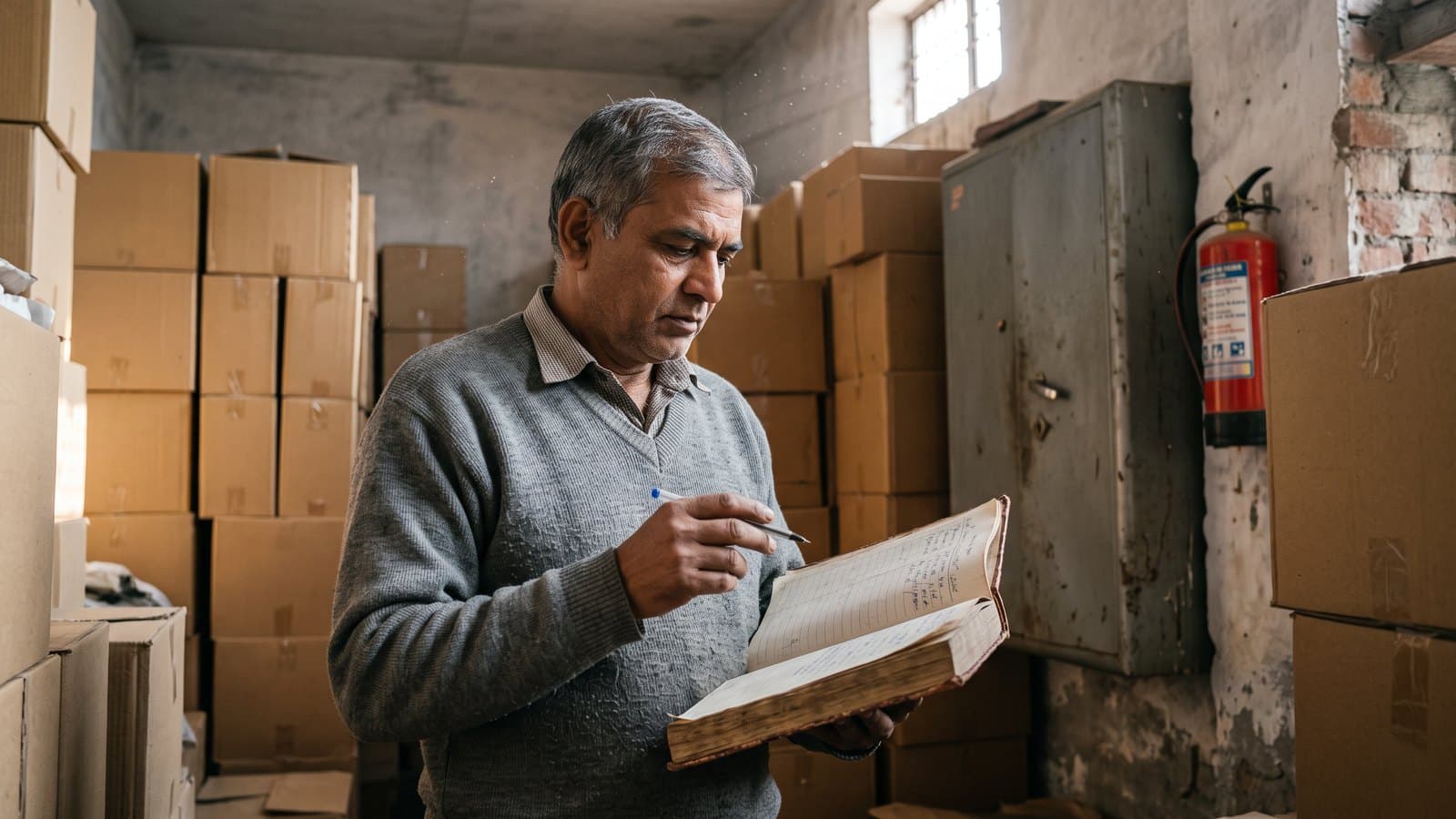
Wine shop insurance is the set of covers that pays you back when your shop's stock, fittings or cash are lost to fire, flood, break-in or robbery. For a liquor shop, it is mostly a question of proof. The policy pays only for what you can show you had on the day of the loss.
Many owners buy a policy once, write a round number for stock and forget it. Then a fire or a break-in comes. The surveyor asks for the stock register, the purchase bills and the stock on that exact day. A register that is two weeks behind turns a full claim into a long argument.
This guide is for UP model, composite, FL and beer shops, and for L-2 and L-14A vends in Haryana. It explains which covers a liquor shop usually takes, how the sum insured is set, and what a claim asks for. It also shows why live stock records for your wine shop decide how much you get back.
The covers a liquor shop usually takes
Insurers sell these covers as separate policies or as sections of one shopkeeper package policy. The wordings we read list sections like these:
Fire and allied perils on the stock, furniture, fittings and building. This is the base cover.
Burglary and housebreaking, for theft after someone forces their way in.
Money, for cash in a locked safe, cash in the counter during business hours, and cash carried to the bank.
Plate glass, for accidental breakage of fixed glass such as a shopfront or display window.
Electronic equipment, for computers and other electronic equipment at the counter.
Public liability, for your legal liability if a customer or passer-by is hurt in an accident at the shop.
Employee dishonesty or fidelity, offered by some insurers as its own section.
In one package wording, the fire section is compulsory and the rest are optional. Each section carries its own sum insured.
The fire cover: Bharat Sookshma and Bharat Laghu Udyam Suraksha
Since 1 April 2021, IRDAI has required general insurers to offer two standard fire products for businesses. Bharat Sookshma Udyam Suraksha is for a location where the total value at risk is up to Rs. 5 crore. Bharat Laghu Udyam Suraksha is for above Rs. 5 crore and up to Rs. 50 crore. A shop whose stock, fittings and building are worth under Rs. 5 crore falls in the first.
Since 1 June 2022, insurers may also file their own fire products alongside these. Ask which product you are buying and ask for its wording.
One insurer's prospectus for Bharat Sookshma Udyam Suraksha shows how the standard product works:
It covers fire, lightning, explosion, storm, flood, earthquake, riot, strike, malicious damage, impact damage and bursting of water tanks or pipes.
It covers theft only within 7 days of one of those events and caused by it. A normal break-in is not covered by the fire policy.
It includes cover for money up to Rs. 50,000 in the policy period.
It deducts an excess of Rs. 5,000 from each claim.
It offers a declaration policy for stocks as an add-on, for stock that goes up and down during the year.
You must tell the insurer if the premises stay unoccupied for more than 30 days.
The theft line matters most. The fire policy alone does not cover a break-in at night. You need the burglary cover as well.
Burglary and money covers need a break-in and a record
The burglary section in the wordings we read pays for loss after forcible and violent entry into the shop. One wording says there must be visible damage to the premises from that entry. These are the exclusions that matter most to a liquor shop:
Loss where your own staff, or anyone lawfully in the shop, was involved.
Unexplained losses and shortages found during a stock count.
Shortages due to errors or omissions in your records.
Money or stock taken from a safe opened with its own key, unless the key was taken by force or threat.
So a gap that turns up when you count the shelves is not a burglary claim. That gap is a record problem first. Our post on how to size a stock shortage before you blame anyone shows how to find it.
The money section has its own rules. In one package wording:
Cash in the shop after business hours is covered only if it is kept in a safe or strong room.
Cash in transit is covered only while you or an authorised employee carries it.
You must keep a daily written record of the cash in the safe, stored somewhere other than the safe.
You must tell the insurer in writing and file a police complaint within 24 hours of the loss.
You declare the stock value: how under-insurance cuts a claim
The insurer does not count your shelves. You declare the stock value in the proposal form, and the premium is worked out on that sum insured. The policy never pays more than that figure.
If the declared value is too low, the claim shrinks. This is the under-insurance or average clause. The fire policy prospectus we read waives under-insurance up to 15%. If your sum insured is below 85% of the real value of the insured property on the day of loss, you bear a proportionate share of the loss.
Here is an example with round numbers. Your stock is worth Rs. 20 lakh at cost on the night of a fire. You insured it for Rs. 12 lakh, which is 60% of its value. A fire destroys stock worth Rs. 5 lakh. The insurer can treat you as your own insurer for the missing part and pay only around 60% of the loss, close to Rs. 3 lakh. The exact sum depends on your policy wording and its excess.
Two more points from the wordings:
Claims are valued at what the goods were worth at the time of the loss, "not including profit of any kind". Think in cost price, not in what you would have sold the bottles for.
When stock moves a lot through the year, ask about the declaration policy for stocks. Insurers set its rules, so read them before you sign.
What a claim asks for
Every policy sets its own deadlines, so read yours. The documents we saw asked for these steps and papers:
Tell the insurer at once. One package wording asks for a written claim within 15 days. The fire prospectus asks for the claim form within 30 days.
Go to the police. A burglary or theft claim needs an FIR. One burglary product asks for the FIR within 15 days. The money section we read wants a police complaint within 24 hours.
Do not move or throw away damaged stock. Take photographs and keep the evidence until the surveyor has seen it.
Give the stock register and books of account. One burglary wording says you must keep "a complete and accurate record of all business purchases, sales and deliveries".
Give the purchase bills for the stock you say was lost.
Show the stock on the day of loss. The surveyor works out what was there that day from your last count, purchases in and sales out.
One shopkeeper wording also has a book-keeping warranty. Your stock books must be locked in a fire-proof safe or taken out of the shop at night. If the register burns with the stock, you have little left to prove your claim.
Why a liquor shop is harder to insure well
A few things make wine shop insurance harder to get right for a liquor shop:
High value in a small room. A few hundred square feet can hold stock worth many lakhs. One fire or one break-in can wipe out a big part of it.
Cash at night. Sales peak in the evening, and the galla closes late. The money cover rules on safes and after-hours cash matter more for you than for most shops.
Stock that swings. Stock goes up before Holi, Diwali and the wedding season. A sum insured set in a quiet month can be far too low in a festival month.
Excise records that must match. The insurer will compare your claim with your records. In UP, the 2019 foreign liquor retail rules ask for a daily account in Form FL-25A. In Haryana, an L-2 vend keeps receipts and sales in Form L-22. If your excise stock, your shop register and your claim show three different numbers, the claim slows down.
Then there is the question every owner asks: will the insurer cover liquor stock at all? The standard wordings we read do not name liquor as excluded property. Each insurer still decides what it will accept, and the premium rate depends on the type of business. Tell the insurer you run a liquor shop, read the exclusions in full, and ask in writing whether your liquor stock is covered and up to what limit. Keep that reply with your policy.
How BottleShop gives you the stock proof
Every claim comes back to one question: what stock did you have on the day of the loss? BottleShop answers it from your own bills.
Purchase entry records every invoice when the stock arrives. Your purchase bills and your stock register stay in step.
Live inventory reduces stock with every bill, so the stock in the system is current on the night of a fire or a break-in.
Daily and compliance reports come from the same billing, so the numbers you give the excise department match the numbers you give the insurer.
Cash drawer management gives you daily cash reporting. You know what was in the galla when the shop closed.
The daily WhatsApp report reaches the owner every day, so you see the shop's numbers even when you are away.
Billing works offline and syncs automatically, so your records do not live only on the counter device. All of this comes with the Essential plan, with inventory, purchase entry and daily reports. If your worry is cash leaving the drawer, the Business plan sends every cash withdrawal to your phone for approval. You can see the full list on our features page. BottleShop is live in 10 states with zero churn.
Frequently Asked Questions
Does a fire policy cover burglary at a liquor shop?
Usually it does not. The standard Bharat Sookshma Udyam Suraksha fire product covers theft only within 7 days of an insured event such as a fire or flood, and caused by it. A normal break-in at night needs a separate burglary and housebreaking cover. Ask your insurer to add it as its own section.
How should I decide the sum insured for my shop's stock?
Declare the full value of your stock at cost, at its highest level in the policy year. Stock rises before festivals and the wedding season. If your sum insured falls below the real value, the under-insurance clause cuts your claim in proportion. Ask about a declaration policy for stocks if stock swings a lot.
Will an insurer cover liquor stock?
It depends on the insurer and the policy. The standard wordings we read do not list liquor as excluded property, but each insurer decides what it accepts. Tell the insurer you run a liquor shop, read the exclusions in full, and get a written answer on whether liquor stock is covered and up to what limit.
What documents do I need for a theft claim?
Expect to give a claim form, the FIR, a written account of the event, the stock register, your books of account, and purchase bills for the lost stock. The surveyor will work out the stock on the day of loss from these. Policy deadlines vary, so read your wording and tell the insurer at once.
Is a stock shortage found during counting covered by insurance?
It is not covered in the burglary wordings we read. They exclude unexplained losses, shortages from errors in records, and shortages discovered during a stock count. They also exclude loss where your own staff were involved. Some insurers sell a separate employee dishonesty cover. Ask about it, and fix the record gap first.
Is cash kept in the counter overnight covered?
Usually it is not. In the money section we read, cash left in the shop after business hours is covered only if it is in a safe or strong room. Cash in transit is covered only while you or an authorised employee carries it. Keep a daily written record of the cash in the safe, stored away from the safe.
Stock milane ka sirdard ab khatam ho gaya. Message us on WhatsApp at +91 84473 30196 for a free inventory audit of your shop.
Last updated: 16 November 2026