Wine Shop Bill Format for UP and Haryana Shops in 2026
Published By: Jatin Monga (CEO) on 18 Nov 2026
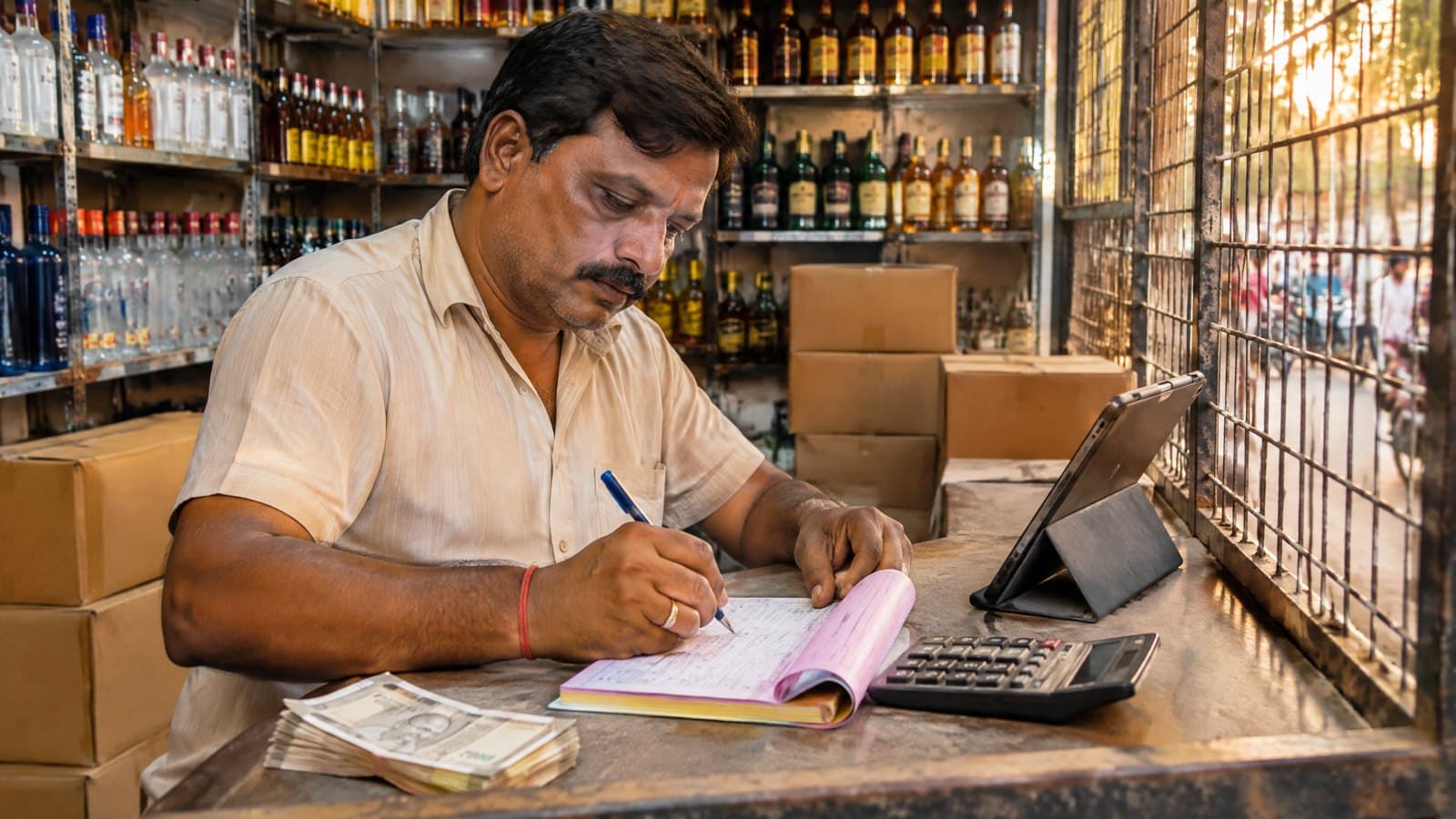
A wine shop bill is the cash memo you hand a customer when he buys liquor. It is also the first record of your day, because every line on it should later show up in your stock and your register.
Most owners know the bill matters. The trouble is the format. In Uttar Pradesh and Haryana, the rules say a lot about prices and registers and very little about what a bill must look like. So each shop invents its own. Some use a hand-written book, some a Word or Excel sheet, and each one drifts a little every month.
This guide gives a practical wine shop bill format for UP and Haryana shops. It separates what the rules say from what is good practice, and it shows how a bill ties to the day's stock. If you want to skip the setup, wine shop billing software does all of this from the first bill.
What the rules say about a liquor bill
We read the rules before writing this, and the summary is short.
Haryana. The Excise Policy 2025-27, clause 1.7, is titled "Issue of invoice". It says every retail licensee must issue an invoice on sale through a Point of Sale (POS) on demand. POS machines must be installed at the sale counter of all retail vends, and the licensee must adopt the integrated POS solution prescribed by the department. For a breach, the policy sets a penalty of Rs. 5,000 per violation for the first 10 violations, Rs. 10,000 for the next 10 and Rs. 25,000 for the next 10. After that the licence may be cancelled with forfeiture of security.
The same policy, in clause 7, sets a minimum retail sale price and says no maximum is fixed. It also says the licensee shall display the sale price of various brands on the vend. So the price on your bill must not fall below the floor.
Uttar Pradesh. We did not find a UP rule that lists what a bill must contain. We did find the price rule. The 2019 foreign liquor retail rules say the licensee shall not charge more than the printed MRP. So no bill may show a rate above MRP.
Consumer law. The Consumer Protection Act, 2019 lets the government prescribe the manner of issuing a bill, cash memo or receipt for goods sold. We did not confirm how that applies to liquor in your state. Ask your district excise office or your CA.
Everything below that goes past these points is good practice, not law. Where we say "should", we mean it is sensible, not mandatory.
What a wine shop bill should carry
This is the content most shops can follow. It works for a theka, a model shop, a composite shop or a Haryana L-2 or L-14A vend.
Shop name and address, as on your licence.
Licence number and type. In Haryana the vend board already carries the licensee name, zone number and licence number, so the bill can match it.
Bill number. One running series, never reused, never edited.
Date and time. The time helps you match a bill to a shift and a cash count.
Item line. Category and brand, so the bill can be tied to stock.
Size. 750 ml and 180 ml are different items with different prices.
Quantity.
Rate per bottle and line amount.
Total.
Payment mode. Cash, UPI or card, so the day's cash matches the galla.
Staff login or counter name. This tells you who billed.
A GST line is not needed for liquor. Liquor is outside GST, and the state taxes it through excise duty and VAT. Our guide to GST on liquor explains what does carry GST in a shop, such as soft drinks and snacks.
A sample wine shop bill format
Here is a short sample with made-up items and illustrative prices. Use it as a layout, not as a price guide.
Shop: Sample Wines, address as on licence
Licence: type and number as on licence
Bill no.: 000123
Date and time: 18 Nov 2026, 7:42 pm
Counter: Counter 1, staff login Ravi
Item 1: Whisky 750 ml, quantity 1, rate Rs. 900, amount Rs. 900
Item 2: Beer 650 ml, quantity 2, rate Rs. 150, amount Rs. 300
Total: Rs. 1,200
Payment: UPI
Two notes on the sample. In UP the rate printed on each line must not be above the MRP on the bottle. In Haryana the rate must not be below the minimum retail sale price for that slab and size, and it can be above it, since no maximum is fixed.
Haryana has no fixed MRP list by brand. The floors are set by slab and bottle size, so your shelf price is your own decision above that floor. That makes the rate on the bill the number that matters. If it is wrong, the shop is wrong for the whole day.
Why hand-written books and Word or Excel formats drift
A hand-written bill book looks safe. It is cheap, it needs no power and the customer gets a paper slip. The problems show up later.
The price drifts. A new policy year changes rates. In a book, each salesman writes the price he remembers. In a Word or Excel template, someone has to update the rate list, and the old file is usually still open on the counter PC.
Entries go missing. On a busy evening, a bill is written for three items and the fourth is told verbally. A torn page or a skipped serial number leaves a gap that nobody can explain at closing.
Nothing links to stock. A paper bill says "whisky, one bottle". It does not say which brand and size left the shelf. So the stock register has to be built by hand from the bills, usually at night, usually by the person who is already tired.
Edits are easy. A pen can change a number after the customer leaves. An Excel cell can change after the bill is printed. Neither leaves a trace.
The register and the bill disagree. In UP, the day ends with the parcha and the category-wise registers for IMFL, wine, beer 5% and beer 8%. Haryana L-2 vends keep receipts and sales in Form L-22 under the 1970 Rules. If the bills are incomplete, these records are incomplete too.
How a bill ties to the day's stock and the register
Think of the bill as the first line of a chain.
The bill names the brand, the size and the quantity sold.
The day's stock falls by exactly that quantity, brand by brand.
The parcha or register for the day is the total of those same bills, grouped the way your state asks.
The cash in the galla matches the total of the cash bills.
If any link is typed by hand, a gap can open at that link. The fix is to type the sale once, at the counter, and let everything else follow from it.
A simple check helps even before you change any tool. At closing, pick any five bills and trace each to the stock register and the parcha. If one does not trace, you have found where your day leaks.
How BottleShop handles the bill
BottleShop builds the bill from the sale itself. The salesman picks the item, the size and the quantity, and the bill is ready in about a second. The rate comes from your item list, so one salesman cannot type a different price from another.
The Essential plan includes 1-second billing with state compliance, purchase entry, inventory and stock transfer, cash drawer management and daily, business and compliance reports. Because the bill is the sale record, stock falls with each bill. For UP, the category-wise daily registers are built from billing, so nobody copies a bill book into a register at night.
For Haryana shops, billing gives you a clean POS bill and live stock. We do not claim an automated Haryana excise return. Check with your district excise office whether your POS must be the department's prescribed solution, since clause 1.7 says the licensee must adopt the integrated solution prescribed by the department.
Billing also works offline and syncs when the internet returns, so a power cut does not send the counter back to the paper book. You can see the full list of what a shop gets on the features section, and read how inventory management keeps stock tied to each bill.
Frequently Asked Questions
Is there a legal wine shop bill format in UP?
We did not find a UP rule that sets a bill format. We did find that the licensee cannot charge above the printed MRP. Treat the format in this guide as good practice, and confirm any required format with your district excise office.
Does a Haryana liquor vend have to issue a bill?
Yes, on demand. Clause 1.7 of the Excise Policy 2025-27 says every retail licensee must issue an invoice on sale through POS on demand, and install POS at the sale counter. The penalty starts at Rs. 5,000 per violation. Confirm the prescribed POS solution with your DETC.
Should a liquor bill show GST?
No. Liquor for human consumption is outside GST, so a bill for liquor alone needs no GST line. The state taxes it through excise duty and VAT. Other items sold at the counter, such as soft drinks or snacks, follow normal GST rules. Check those with your CA.
Can a Haryana shop sell above the rate on the bill?
The rate on the bill is the rate you sell at. Haryana sets a minimum retail sale price and fixes no maximum, so you may sell above the floor. You may not sell below it. A sale below the floor can lead to suspension of the licence, so check the clause 7 penalty with your DETC.
What happens if a bill is missing from the book?
It leaves a gap between your sales, your stock and your register. The register for the day will not match the stock count, and the cash will not match the bills. Trace the serial number, find the sale, and correct it the same day.
Can I use Excel for my wine shop bill format?
You can, but it drifts. Rates are updated by hand, bills can be edited after printing and nothing links the sale to stock. A billing system that fixes the rate, locks the bill number and reduces stock on each sale removes those gaps.
Raat ka hisaab ab apne aap mil jaata hai. If you want to see where your stock and your bills part ways, ask for our free inventory audit on WhatsApp at +91 84473 30196.
Last updated: 18 November 2026