GST on Liquor: What Carries GST in a Wine Shop (2026)
Published By: Jatin Monga (CEO) on 08 Nov 2026
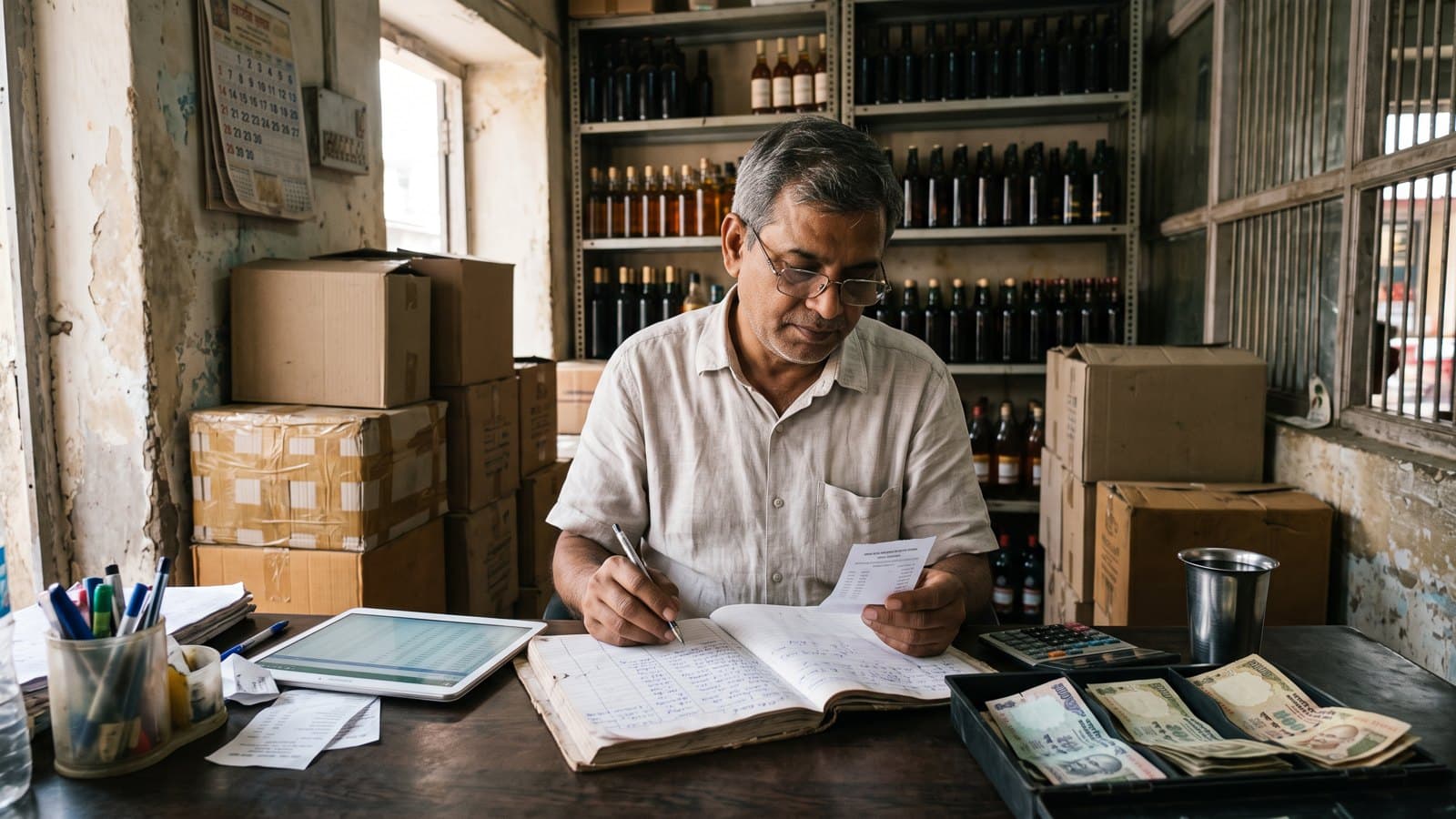
There is no GST on liquor. The GST law taxes the supply of goods and services, but it leaves out alcoholic liquor for human consumption. Every bottle of whisky, rum, beer and wine you sell is taxed by the state instead, through excise duty and VAT.
That is simple for the bottle. It gets confusing the day your shop sells one more item. A soft drink, a packet of snacks or a software bill does not follow the liquor rule, and the same counter now has two sets of rules. Owners and accountants then ask the same questions every quarter: what carries GST, what does not, and what can be claimed back.
This guide answers those questions for UP and Haryana shops. It shows how to keep the liquor bill and the other items apart, where the input credit trap sits, and how to hand your accountant clean books. Billing that keeps each sale in the right bucket, like wine shop billing software, makes the whole thing easier. Where a rate or a filing rule is involved, the safe step is to confirm it with your CA.
Is there GST on liquor?
No. Section 9 of the CGST Act charges tax on supplies "except on the supply of alcoholic liquor for human consumption". The Constitution makes the same exclusion. Alcohol is still goods, but GST is not levied on it.
So a bill for liquor shows no GST line. Your purchase invoice from the wholesaler or the depot shows none either. If anyone tells you a liquor bill must carry GST, ask for the section.
Only liquor for human consumption is outside GST. Spirit used in industry or in sanitiser is a different product with a different rule.
What the state charges instead
Because GST stays out, the states keep the power to tax liquor. They do it through the State Excise Act and the State VAT Act, and through licence fees. That is why your tax position depends on your state and your licence.
In Uttar Pradesh, the daily parcha and the category-wise registers are your excise record, and the monthly MST stock report goes with them. In Haryana, the excise policy sets your licence fees and your stock rules. None of these is a GST return.
The exact VAT or duty on a bottle is built into the price you pay and the MRP you sell at. Do not guess a percentage. Read the rate from your purchase invoice, or ask your CA.
What in a liquor shop can carry GST
The exclusion covers liquor only. Everything else you sell or buy follows the normal GST law.
Items you sell besides liquor are the first place to look. Soft drinks, soda, packaged water, mixers and snacks are ordinary goods, so GST rules apply to them. The rate depends on the item and it has changed in recent years. Check the current rate for each item with your CA before you put it on a bill.
Items you buy for the shop are the second place. A fridge, a billing device, a software subscription, a printer or services from a registered supplier can come with GST on the invoice. Ask your CA whether your rent carries GST.
Two things do not depend on any of this. Liquor sold at the counter stays outside GST. And a bill for liquor alone never needs a GST line.
Keep the liquor bill and the other items apart
The common mistake is mixing the two on one bill without a plan. A customer buys two bottles and a packet of snacks. The total looks like one sale. For your books, it is two kinds of sale.
Here is a clean way to handle it.
Give every item a clear category in your item list. Liquor in its liquor category, soft drinks and snacks in their own.
Never add GST to a liquor price, and never take it out of one. The MRP on the bottle is the price.
For non-liquor items, ask your CA whether you must charge GST, at what rate, and whether you need a registration. Write the answer down once and follow it.
Keep the non-liquor sales as a separate total in the daily report, so the accountant does not have to pull them out by hand.
Match the cash drawer at night against the total of both. The gap, if any, is then a count error and not a tax question.
Registration is the one thing not to guess. Whether you must register depends on what you sell, your turnover and your state. Your CA will give you a clear yes or no after seeing your last twelve months.
The input credit trap
Input tax credit, or ITC, lets a registered business subtract the GST it paid on purchases from the GST it collects. Liquor owners fall into two traps with it.
The first trap is on the liquor itself. Your liquor purchases carry no GST, so there is nothing to claim on them. Do not look for a credit line on a wholesaler invoice.
The second trap is on shop costs. If you are registered and you make both taxable and exempt supplies, Section 17(2) of the CGST Act limits your credit to the part used for the taxable supplies. Liquor counts on the exempt side. A West Bengal Authority for Advance Ruling has held that a seller of liquor must reverse credit under this section.
In plain words, GST paid on a fridge or a software bill is not automatically yours to claim in full when most of your sale is liquor. The share you can claim depends on your own numbers. Ask your CA to work it out once, and keep every GST invoice in a separate file so that the work takes an hour, not a week.
Make the books Tally-ready
Books are slow to close when sales sit in one place, purchases in another and expenses on loose slips. The fix is the same each month: one sales total per day, one purchase entry per invoice, and one cash figure that matches the drawer.
BottleShop bills liquor with the state registers built from the same sale, and it keeps the cash drawer and daily reports in one place. The Business plan adds a Tally export, which gives reports formatted for direct Tally upload, so your accountant imports the month instead of typing it. BottleShop does not charge GST on a liquor bill, because none is due. For non-liquor items, follow what your CA has told you. The wine shop software page shows the full set.
Give your accountant these every month: the daily sales report, purchase invoices with the supplier name and date, a list of GST invoices for shop costs, and the cash drawer figures. With those four, the books close without questions.
Frequently Asked Questions
Is there GST on liquor in India?
No. The GST law leaves out alcoholic liquor for human consumption. States tax it through excise duty and VAT instead. Your liquor bills and your liquor purchase invoices carry no GST line. Other items you sell, such as soft drinks or snacks, follow the normal GST rules, so confirm their rates with your CA.
Does a wine shop need a GST registration?
A shop that sells only liquor has no GST to collect on those sales. If you sell other items or buy services that carry GST, the answer depends on what you sell, your turnover and your state. Do not guess. Ask your CA with your last twelve months of sales in hand.
Can I claim input tax credit on liquor purchases?
No. There is no GST on liquor purchases, so there is no credit to claim. Credit on other costs, such as a fridge or software, is limited when you also make exempt supplies. Section 17(2) of the CGST Act sets that limit. Your CA can work out the share for your shop.
Should I add GST to the MRP of a bottle?
No. The MRP on a liquor bottle is the final price and no GST is added on top. Adding a GST line to a liquor bill is a mistake. For non-liquor items, charge GST only as your CA has advised, with the right rate for each item.
What is the easiest way to keep liquor and non-liquor sales separate?
Give each item its own category and keep non-liquor sales as a separate total in the daily report. At night, match the drawer against the combined total. Your accountant then picks up two clean figures and does not have to separate them by hand.
What should I give my accountant for Tally every month?
Give the daily sales report, purchase invoices with supplier name and date, a separate file of any GST invoices for shop costs, and the cash drawer figures. With the Business plan, the Tally export gives sales reports formatted for direct Tally upload, so the accountant does not retype them.
Hisaab ab andaaze se nahi, bill se hota hai. Message us on WhatsApp at +91 84473 30196 for a free inventory audit of your shop.
Last updated: 8 November 2026