UP Excise Online Challan 2026: What a Shop Pays and How to Track It
Published By: Jatin Monga (CEO) on 20 Nov 2026
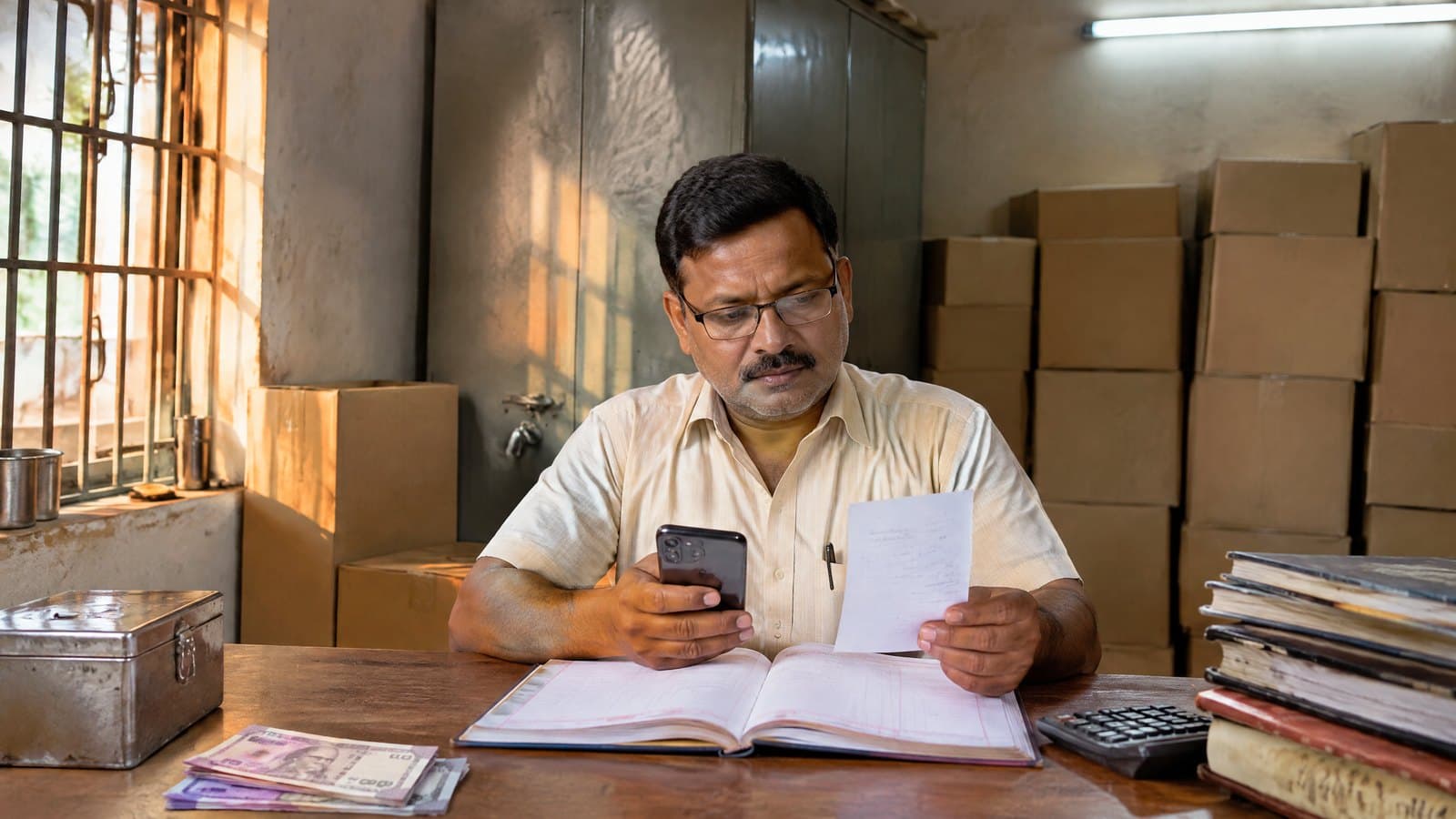
A UP excise online challan is the payment slip a licensee creates on the excise department's portal to deposit fees and dues to the state. The money then goes to the government through Rajkosh, the online receipt system of the UP treasury.
Most shops do not have trouble paying. The trouble starts later. Cash is taken from the galla for a fee, the challan print sits in a drawer, and three months on nobody can say which payment was for what. When renewal comes, every rupee has to be proved.
This guide covers what a running shop pays by challan, how the payment works, how to check its status and print it, and the records that keep it matched with your books. If your monthly MST stock report and your lifting already sit in one place, most of this becomes easy.
What a running UP shop pays by challan
The exact list depends on your shop type, your district and the policy of the year. These are the payments a composite, model, country liquor or bhang shop usually deals with.
Basic licence fee and licence fee. A Fatehpur district notice for 2025-26 told e-lottery winners to deposit the full basic licence fee or licence fee on the cms.upexciseonline.co portal. The country liquor rules, in their Eighteenth Amendment, say the selected person deposits the basic licence fee and security "in the time schedule and in the manner prescribed by the State Government."
Security. Every shop deposits security. For a newly created model shop, the 2026-27 policy sets it at 10% of the licence fee.
Additional security for a lifting shortfall. The 2023 text of rule 13 for foreign liquor retail shops sets a monthly minimum guaranteed revenue. If a shop lifts less in a month, it deposits additional security for the gap within 10 days. If it does not, the licence stands cancelled.
Processing fee and renewal fee. The 2026-27 policy charges a non-refundable processing fee to apply for renewal, and a renewal fee once renewal is approved. The processing fee is set by shop type and, for most shops, by area category. Confirm the renewal fee amount with your district excise office.
Compounding fee. If an offence is compounded, the shop pays a compounding fee. The 2019 foreign liquor retail rules list minimum amounts, for example Rs. 10,000 the first time a stock register is not produced. Confirm the current amounts with your district excise office.
Your stock payment works differently. Under rule 13, a retail shop pays the full cost price, taxes and consideration fee before its wholesaler supplies, "preferably through e-payment platform". Ask your wholesaler how that payment is routed for your shop, and keep its reference with the indent. Our indent guide covers sizing the order itself.
Why the department wants every challan online
The public excise portal, cms.upexciseonline.co, carries a standing notice for users. It asks them not to submit any challan in manual mode at the treasury. It tells them to always use the online facility on the portal to deposit challans.
The reason is simple. An online challan is tied to your details, the fee type and the head of account from the start. A paper challan has to be matched by hand later. For you, the online route also means a record you can check and print at any time.
How the UP excise online challan is made and paid
The public portal has an Online Challan page. We read the form on it in November 2026. It asks for these details:
The assessment year and the deposit period the payment is for.
The depositor's name, mobile number and address.
The district, division and treasury.
Supporting documents, as a JPG, JPEG, PNG or PDF file, and any remarks.
For each payment line: the fee type, the challan head, the G6 head and the amount.
The mode of payment. The form lists Rajkosh.
The portal creates the challan. The payment is then completed through Rajkosh, which a CAG audit report lists as the online receipt module of the UP treasury system. Follow the payment options Rajkosh shows you on the day.
If your district office asks you to pay from your licensee login on excise.up.gov.in instead, follow what that login shows. Menu names there change. If you need help with the login itself, our guide to the UP excise portal login covers it.
Three habits save trouble here.
Pick the right fee type and head. A licence fee paid under the wrong head is the hardest mistake to undo. If you are unsure, call your district excise office before you pay, not after.
Pay from the shop's bank account. A payment from a staff member's personal account is hard to trace at renewal.
Note the challan number at once. Write it in your cash book the same day, next to the amount.
How to check UP excise online challan status and print it
The public portal also has an Online Challan Verification page. You do not need to log in. You enter the challan number and a captcha. The form says the challan number starts with three letters, followed by 4 to 19 letters or numbers.
The result shows the depositor's name, application number, transaction number, district, treasury, challan head, G6 head, amount, mode of payment, a description and the status. There is also a download column, which is where you take a copy to print.
Check every challan this way within a day of paying. Look at three things: the status, the amount and the head. If money has left your bank but the status does not show it as paid, take your bank statement and the challan number to your district excise office. Do not pay a second time until they confirm.
Print two copies. One goes in the shop's challan file. The other goes to your accountant.
Renewal week: the challans that come with a deadline
Renewal is where challans pile up in a short window. For 2026-27, the policy and the portal timetable set this order:
The processing fee was paid with the renewal application, from 18 February 2026.
After the licensing authority's decision, the shop paid the renewal fee and 50% of the basic licence fee or licence fee within 3 bank working days.
The rest of the fee was due by a date the Excise Commissioner sets.
A security difference paid late carried Rs. 2,000 a day, for at most 15 bank working days. After that, the renewal was cancelled.
A renewal condition is that all dues up to the last lapsed month are paid. That is a challan question. A shop with a clean challan file answers it in minutes. A shop without one spends renewal week searching for slips. The 2027-28 dates will come with next year's policy, so confirm them with your district excise office.
The records that keep every rupee matched
A challan is one line of proof. It has to match three other records: your bank statement, your cash book and your stock.
A challan file. One file for the year with every challan, in date order. For each one: challan number, date, fee type, head, amount, transaction number and the month it covers.
A monthly bank match. Once a month, tick each challan against the bank debit. Any challan without a debit, or a debit without a challan, gets chased that week.
The cash book. If cash was taken from the galla to pay a challan or deposited into the bank for it, write it as a withdrawal with the challan number beside it. An unexplained gap in the galla is how small leaks start.
Lifting against the minimum. Track what you have lifted against your monthly minimum guaranteed revenue each week. A shortfall seen on the 20th can still be fixed by an indent. A shortfall seen in next month's MST becomes a security deposit.
Indent payment references. Keep each payment to the wholesaler with its indent and the invoice of the stock that arrived.
When these five agree, renewal, inspection and your accountant's year end all get shorter.
How BottleShop keeps payments, cash and stock in step
BottleShop does not create or pay challans. You still do that on the excise portal and through Rajkosh. What BottleShop does is keep the shop's side of the books clean, so every challan has something to match against.
Purchase entry and inventory. When stock arrives, enter the purchase and your stock updates. You always know what you have lifted this month and what is on the shelf.
Daily and compliance reports. The daily category-wise registers for IMFL, wine, beer 5% and beer 8% are built from billing, and so is the stock behind your monthly MST report.
Cash drawer management. Daily cash reporting shows what came into the galla and what went out.
Owner approval for cash withdrawals. On the Business plan, a cash withdrawal from the galla sends a WhatsApp OTP to the owner's phone for approval. If the manager takes cash out to pay a challan, the owner approves it first and the entry stays on record.
Tally export. The Business plan also gives your accountant reports formatted for direct upload into Tally.
Billing takes under one second and works in full offline mode with auto-sync. BottleShop is India's first liquor-only POS and is live in 10 states with zero churn. You can see every module on the features page.
Frequently Asked Questions
What is a UP excise online challan?
It is the payment slip a UP excise licensee creates on the department's portal to deposit fees and dues, such as licence fee, security or renewal fee. The portal creates the challan with your details, fee type and head of account. The payment then completes through Rajkosh, the online receipt system of the UP treasury.
How do I check the status of my challan?
Open the Online Challan Verification page on cms.upexciseonline.co. Enter the challan number and the captcha. No login is needed. The result shows the name, transaction number, treasury, head, amount, mode of payment and status. Check every challan within a day of paying, and keep a copy in your challan file.
Can I deposit an excise challan at the treasury by hand?
The public excise portal asks users not to submit any challan in manual mode at the treasury. It tells them to always use the online facility on the portal to deposit challans. If your district office gives you a different instruction for a special case, get it in writing before you pay.
What happens if my shop lifts less than its minimum guaranteed revenue?
Under the 2023 text of rule 13 for foreign liquor retail shops, the licensee deposits additional security for the gap within 10 days. If it does not, the licence stands cancelled. Country liquor shops have their own rules. Confirm your shop's monthly figure and the payment route with your district excise office.
What should I do if money is debited but the challan shows unpaid?
Do not pay again straight away. Note the challan number and the bank transaction reference, and print your bank statement for that day. Take all three to your district excise office and ask them to trace the payment. Paying twice under the same head only gives you a refund to chase.
Does BottleShop pay excise challans for my shop?
No. You create and pay challans yourself on the excise portal and through Rajkosh. BottleShop keeps your purchases, stock, daily registers and galla cash in one place. On the Business plan, cash withdrawals need the owner's approval on WhatsApp, so cash taken out for a challan is always recorded.
Galla short hai toh usi shaam pata chal jaata hai. Message us on WhatsApp at +91 84473 30196 for a free inventory audit of your shop.
Last updated: 20 November 2026