UP Excise MRP List: Keep Your Counter Prices Right in 2026
Published By: Jatin Monga (CEO) on 16 Nov 2026
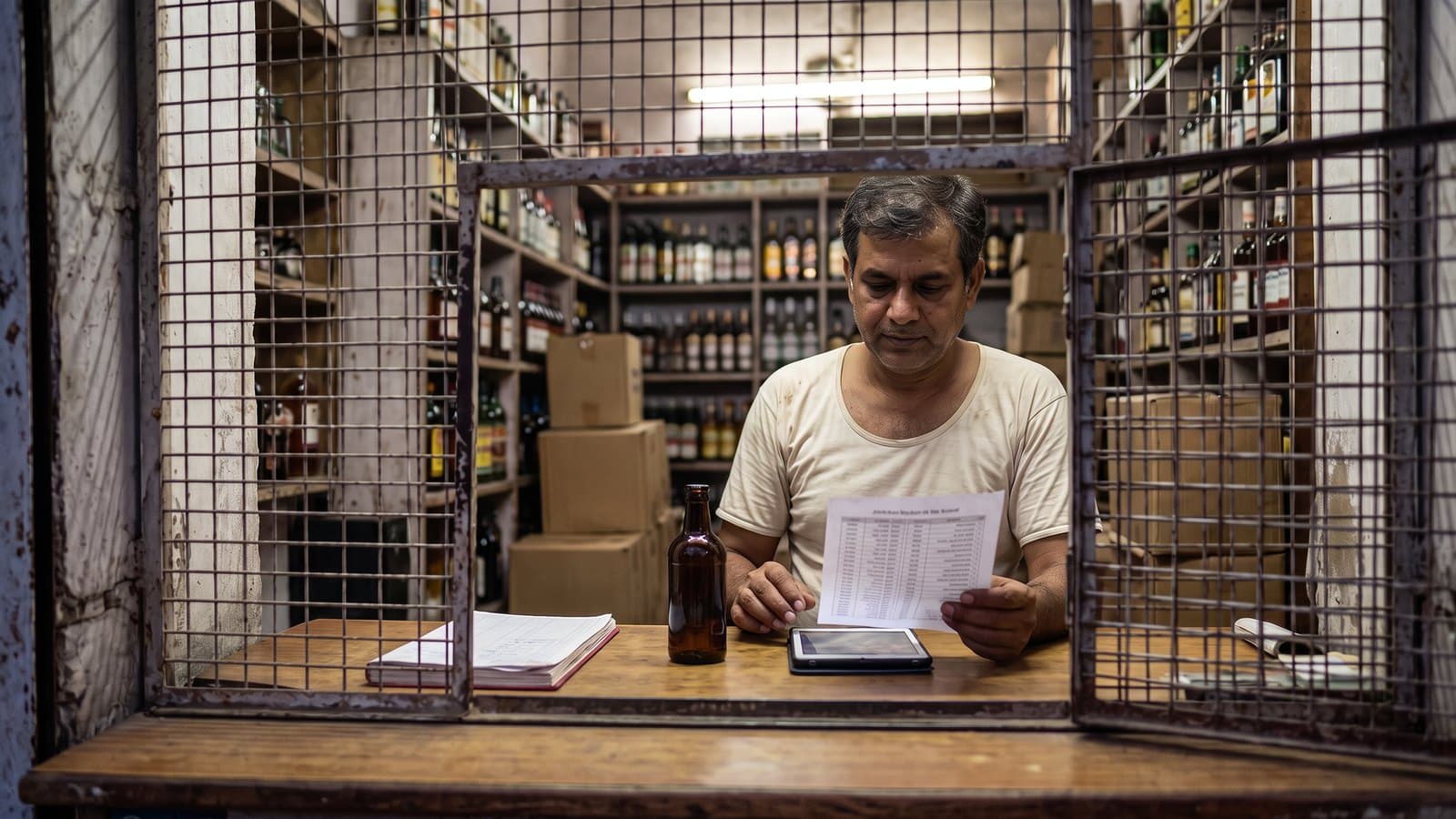
In Uttar Pradesh, every brand and bottle size of liquor has a maximum retail price fixed through the excise department. The UP excise MRP list is that set of prices, and it is the highest amount your shop may charge a customer for any bottle.
Most owners know this. The trouble starts at the counter. A new policy year changes prices, a new label arrives, someone types a wrong rate into the billing system, or a salesman adds ten rupees during the evening rush. Each of these puts your counter price out of step with the excise list, and a customer can now check the price on his phone.
This guide explains what the list means for a retailer, where to check a brand's MRP, what the rules say about selling above it, why prices drift, and a simple routine that keeps every bill at the right rate.
What the UP excise MRP list means for your shop
For a retail licensee, the MRP is a ceiling. The 2019 text of UP's foreign liquor retail rules says the maximum retail price shall be printed on the label of every bottle of foreign liquor and wine. It then says the retail licensee shall not charge more than the printed MRP.
The same text goes further. Under rule 18, the licensing authority may suspend or cancel a licence if any bottle or container without a printed MRP is found in the shop. So the MRP is not only a sticker. It is part of your licence conditions.
For your shop, this means three things:
Every item in your billing system needs one correct price for each size.
That price must match the excise list for the current policy year.
Every bottle on your shelf must carry its printed MRP.
These lines come from the foreign liquor rules. Composite shops, country liquor shops and beer shops work under their own licence conditions, so confirm yours with your district excise office.
Where to check a brand's MRP
You do not need to rely on a WhatsApp forward or the wholesaler's word. The department publishes prices on its own portal at cms.upexciseonline.co. Under the MRP menu you will find these pages:
Entity Type Wise MRP. Search by financial year. Each row shows the unit, the brand, where it is sold, the size, the MRP, and whether the brand is new or renewed.
Liquor Type Wise MRP. Filter by liquor type and sub type, such as whisky or beer, and see every brand in that group.
Liquor Price Finder. Pick a liquor type, brand, size and pack type, and the page shows the price.
Historical Brand Details. Older MRPs by brand and size, for the years 2020-21 to 2023-24.
The second place is the UP Excise Citizen App. Its Play Store listing says customers can scan the QR code of a bottle bought at a retail store, find nearby shops, see the price of liquor and file a grievance. Our guide to what your shop must scan explains the QR side of this.
The point for an owner is simple. Your customer and the excise inspector both see the same list you do. A price that is wrong at your counter is visible to anyone with a phone.
Selling above MRP is an offence
The 2019 text of the foreign liquor retail rules has a table of minimum compounding fees. For "selling of liquor above the prescribed MRP" it lists:
Rs. 10,000 the first time
Rs. 20,000 the second time
Rs. 30,000 the third time
That is the 2019 text. A later amendment or the newer composite shop rules may have changed these amounts. Confirm the current fee for your licence with your district excise office.
The fee is not the only cost. Customers can file a grievance through the UP Excise Citizen App, so one overcharged bill can turn into a complaint against your shop.
Can a UP shop sell below MRP?
The 2019 text sets a maximum. We did not find a UP rule that fixes a minimum retail price for retail shops. Haryana works the other way, with a minimum sale price by slab and no maximum. Before you run any discount or scheme below MRP in UP, check with your district excise office.
Why counter prices drift away from the list
Very few owners set out to overcharge. Prices drift for ordinary reasons, and most of them are slow and quiet.
A new policy year changes MRPs
UP's policy year starts on 1 April. When the 2026-27 policy was announced, PTI reported that the MRP of country liquor and UP Made Liquor, except the 25% v/v strength, would be rounded up to the next multiple of Rs. 10. The same report said prices across categories were expected to rise from April, and a new 100 ml pack was introduced for 42.8% v/v UPML. If your billing system still carries last year's rates on 2 April, every bill of those items is wrong.
New labels and new sizes arrive
A brand launches a new size, changes its label, or gets renewed for the new year. Someone adds it to the system in a hurry, often by copying a similar item. The copied price stays behind.
A wrong price sits in the billing system
One wrong rate on a fast-moving brand repeats on every bill. It may be ten rupees too high or too low. Too high is an overcharge. Too low is money gone from your galla that no one can explain at night. A billing system built for liquor shops keeps one price per item and size, so you fix it once.
Staff change the price at the counter
At 8 pm on a Saturday, a salesman under pressure may round a price up or charge "a little extra" for a cold bottle. Or he may give a friend a discount. If your system lets anyone edit the price on a bill, you will not know until a customer complains.
The fix: one master price list, checked at the right times
The fix is a routine, not a one-time clean-up. It takes a few hours at the start and a few minutes after that.
Make one master price list for the shop. It holds one MRP for every brand and every size. This list lives in your billing system, not on loose paper at the counter.
Match it to the excise list once. Open the Liquor Price Finder or the MRP pages on the department portal. Check your top-selling brands first, then the rest. Correct every mismatch.
Check again when the policy year turns. In the first days of April, compare your list with the new year's MRPs. Pay special attention to country liquor and UPML, where the rounding rule changes the price.
Check every new brand or size before the first bill. When a new item comes in on an invoice, look up its MRP on the portal before you add it. Never copy the price of a similar item.
Lock price changes to the owner. No salesman or manager changes a rate without your yes. If a price must change, it changes in the master list, not on one bill.
Read the day's bills every night. Look for any item billed at a different rate from the list, and any unusual discount or cancelled bill.
Check your staff before you hire. The same portal publishes a Blacklisted Shop Staff list with district, shop and FIR details. Look a new salesman up before he starts.
Steps 5 and 6 are the hard ones on paper. They need a system that stops the change and tells you about it.
How BottleShop keeps every bill at the right MRP
BottleShop is India's first liquor-only POS. Each item and size carries one price in the master. The salesman picks the bottle and the bill comes out at that price in under a second, even in the evening rush.
The control sits with the owner. On the Business plan, a retail price change needs your approval through a WhatsApp OTP on your phone. Discounts and bill cancellations go to you for approval in the same way. A salesman cannot quietly change the price on a bill.
Every evening, the daily WhatsApp report shows what was sold. The daily, business and compliance reports show each bill, so a rate that looks wrong stands out the same night. BottleShop also runs on an Android tablet, works offline with auto-sync, and is live in 10 states with zero churn. You can see the full list of features on our site.
When the policy year turns, you update the master list once and every counter bills at the new rate from the next bill.
Frequently Asked Questions
What is the UP excise MRP list?
It is the set of maximum retail prices for every brand and bottle size sold in Uttar Pradesh, published through the excise department. A retail shop may not charge a customer more than this price. The department's portal shows the list by financial year, so you can match your shop's prices to the current year.
Where can I check the MRP of a brand in UP?
Use the MRP pages on the UP excise portal at cms.upexciseonline.co. The Liquor Price Finder lets you pick the liquor type, brand, size and pack type and shows the price. Customers can also see prices in the UP Excise Citizen App, which scans the QR code on a bottle.
What is the fine for selling above MRP in UP?
The 2019 text of UP's foreign liquor retail rules lists a minimum compounding fee of Rs. 10,000 the first time, Rs. 20,000 the second time and Rs. 30,000 the third time. Later rules may have changed these amounts. Confirm the current fee for your licence with your district excise office.
Can a UP liquor shop sell below MRP?
The 2019 foreign liquor retail rules say a shop shall not charge more than the printed MRP. We did not find a UP rule that sets a minimum retail price. Check with your district excise office before you sell any brand below its MRP.
When do MRPs change in UP?
MRPs mostly change at the start of the policy year on 1 April, when the new excise policy takes effect. For 2026-27, country liquor and UP Made Liquor prices, except the 25% v/v strength, were rounded up to the next Rs. 10. New brands and sizes can also be added during the year.
How do I stop staff from changing prices at the counter?
Keep one master price list in your billing system and allow no price edits on a bill. Any change should need the owner's approval. On BottleShop's Business plan, a retail price change, a discount or a bill cancellation needs a WhatsApp OTP from the owner before it goes through.
Kis bill pe kisne discount diya, ab pata hai. Message us on WhatsApp at +91 84473 30196 for a free inventory audit of your shop.
Last updated: 16 November 2026