Haryana Wine Shop Timing 2026: Hours, Dry Days and Closing
Published By: Jatin Monga (CEO) on 21 Nov 2026
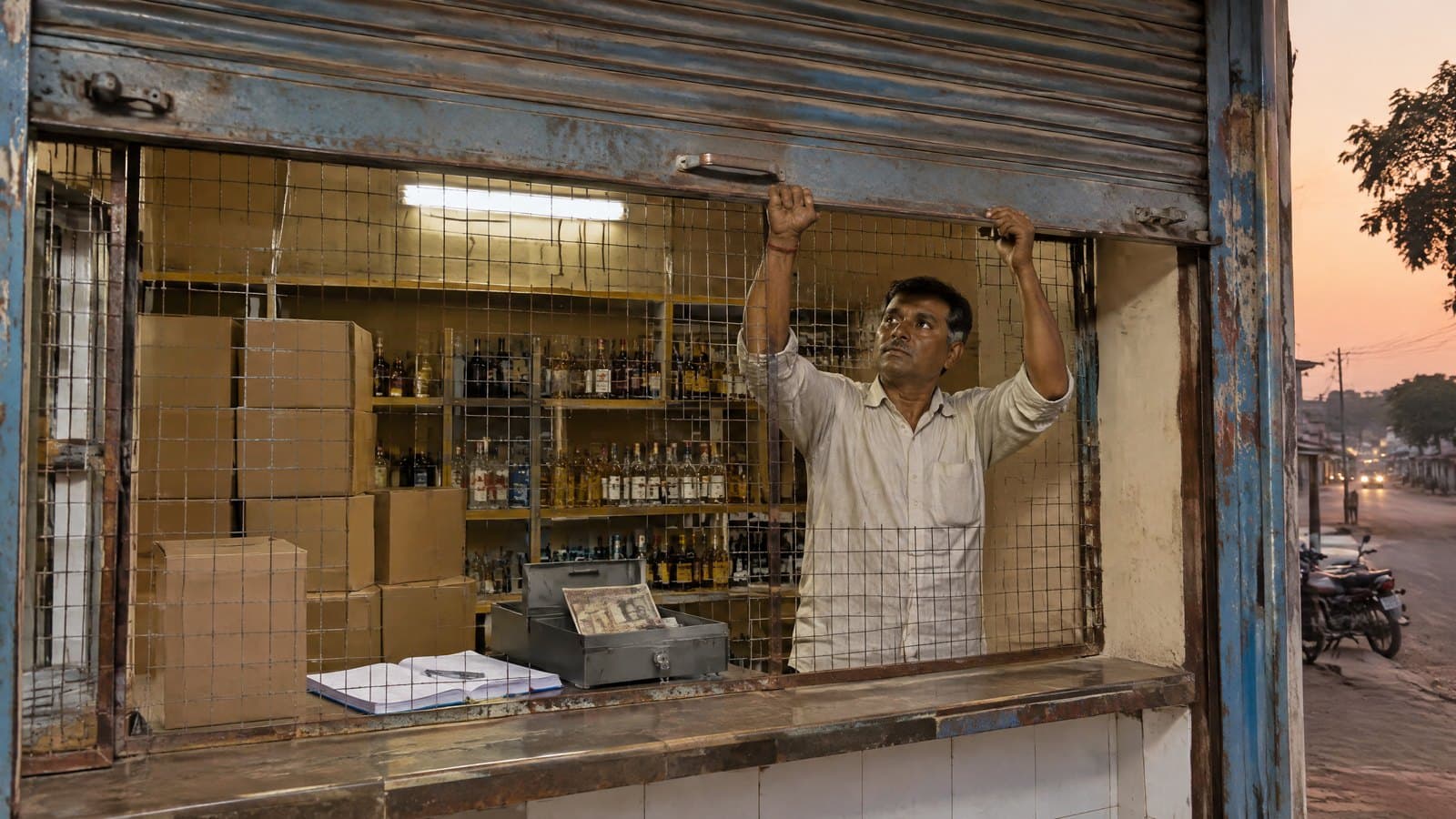
Haryana wine shop timing is set by the state's Excise Policy 2025-27, not by the owner or the local market. The sale hours depend on whether your vend is urban or rural, and in a rural vend they change with the season.
This guide is for the person who runs an L-2 or L-14A vend: the hours, the paid extension, dry days, what the policy says when a vend breaks them, and how to close the shop each night. Every figure comes from the policy text. Confirm anything that matters to you with your district excise office, because notices can change during the policy period.
Haryana wine shop timing: the hours in the policy
Clause 12.7 of the policy, titled "Hours of Sale", sets two sets of hours.
Urban vends: 8 am to midnight, all year.
Rural vends: 8 am to 11 pm from April to October, and 8 am to 10 pm from November to March.
So a rural vend closes an hour earlier in winter. An urban vend does not change with the season.
The policy does not define "urban" and "rural" in this clause. Your vend is treated as one or the other under the excise arrangement for your zone. If you are unsure which applies, ask the DETC (Excise) office before you set your shutter time.
The same clause says nothing about lunch breaks or a half-day. The hours above are the limit, not a duty to stay open all of them.
The paid option to stay open longer
An urban vend that wants to sell beyond midnight can ask for more hours. Clause 12.7 allows an extension of up to 4 hours. The additional licence fee is 25% of that vend's licence fee for the Excise Policy Year 2025-27.
The policy also tells you how to work out "that vend's licence fee". Take the licence fee of the zone and divide it by the number of main vends in the zone, as per the excise arrangements. The result is the fee on which the 25% is charged.
The note adds one more detail. To begin with, the licensee may ask for permission on a quarterly basis, after paying the proportionate fee in advance.
Two points to keep in mind before you apply.
The extension is written for urban vends. The clause gives no extended hours for a rural vend.
Selling past your hours without this permission is not a free choice. It is a breach, and the next section covers what the policy prints about it.
Before you pay, work out whether the late hours bring in enough extra sale to cover the fee, the extra staff time and the later closing.
Dry days and election closures
Clause 2.13.1 lists the dry days.
26 January (Republic Day): closed until 5 pm.
15 August (Independence Day): closed until 5 pm.
2 October (Mahatma Gandhi's Birthday): closed all day.
The same clause adds election closures. Vends must stay closed during any Parliament or State Assembly election, as directed by the Election Commission of India. For elections to Panchayati Raj Institutions and Urban Local Bodies, vends must close in the area of the election.
The licensee gets no compensation of any kind, and no relief in licence fee or quota, for an election closure.
Other festivals, including Diwali, are not listed in this clause. Do not assume a closure from a rumour. Ask the excise office, or read the notice for your district.
What happens if a vend sells on a dry day or outside hours
The policy is specific about dry days. Clause 2.13.1 says that if a breach of a dry day is detected, then in addition to the penal proceedings, the vend is automatically sealed for seven days. The seven days start from the day after the dry day. The DETC (Excise) seals it and informs the Excise and Taxation Commissioner and the Excise Collector. No compensation and no relief in licence fee is given.
Seven days of closed shutter is a large loss for a vend, plus the fee and quota that carry on while it is shut.
For selling outside the permitted hours on an ordinary day, we did not find a separate penalty amount printed in clause 12.7 or elsewhere in the policy. That does not make it safe. Any breach can lead to action under the Haryana Excise Act, 1914 and its rules. Ask your district excise office what applies in your case, and do not guess a figure.
There is one more rule that touches the shutter. Under clause 1.7, every retail licensee must issue an invoice on sale through a POS on demand, and POS machines must be installed at the sale counter. The penalty for breach is Rs. 5,000 per violation for the first 10 violations, Rs. 10,000 for the next 10, and Rs. 25,000 for the next 10. After that the licence may be cancelled with forfeiture of security, after an enquiry. So the last bills of the night must be proper POS invoices too.
How a vend runs closing, step by step
The policy sets when you may sell. It does not tell you how to count the shop at night. That part is your own routine, and it decides whether you find a problem the same evening or at the end of the month.
A closing that works for a vend with a manager and a few staff looks like this.
Announce the last bill. Tell the staff the time of the last bill, a few minutes before your shutter time. Customers already inside at that time can be served. After that, no new billing.
Keep staff hours in mind. Clause 2.13.2 limits daily working hours at retail outlets to 8 hours a day and gives every employee a weekly rest. A vend open from 8 am to midnight needs shifts, not one team all day.
Close the counter. Finish every open bill. Check that nothing is left on hold or half billed.
Count the cash. Count the galla and write the figure down. Compare it with the cash sales of the day.
Record cash taken out. Any withdrawal for expenses or the owner should be written with a reason.
Count stock at the shutter. A full count every night is not needed. Pick the fast movers, or the brands that matter most that day, and match the shelf with the stock figure. A short daily count catches a gap while people still remember the day.
Lock up with two people. The manager and one other person see the cash into the safe or the bag, and the shutter down.
Send the day's figure to the owner. The owner should know the day's sale and cash before he sleeps, not next week.
A paper register can do all of this. It takes time at the end of a long day, and the count is only as good as the person who is tired. This is where most shortages stay hidden.
How BottleShop helps a vend close the day
BottleShop liquor store software is built to run a liquor shop's billing and back office. For closing, the useful parts are these.
Billing and reports. Bills are made at the counter in about a second, with state compliance built in. The daily, business and compliance reports come from the same bills, so the day's figure is ready when you close.
Cash drawer management. The cash side of the day is recorded, so you can compare the galla with the day's cash sales.
A daily WhatsApp report to the owner. The owner gets the day's report on his phone, without being at the vend.
Owner approvals on WhatsApp OTP. The Business plan sends bill cancellations and cash withdrawals to the owner's phone as an OTP request. A manager cannot cancel a late bill or take cash out without the owner's approval.
Billing keeps working when the internet is down and syncs when it returns, so a late rush does not stop at the last bill because of a weak connection.
BottleShop does not set your opening hours or stop you from billing after hours. Your timing stays your responsibility under the policy. What the software gives you is a clear record of every bill and every rupee at the end of each day.
You can see the full list on the features section of the site. Plans start at Rs. 25,000 a year, about Rs. 70 a day. For the wider rules that hit an L-2 or L-14A owner this year, read our guide on what Haryana L-2 and L-14A owners must know.
Frequently Asked Questions
What are the opening hours for a liquor vend in Haryana?
Under clause 12.7 of the Excise Policy 2025-27, an urban vend sells from 8 am to midnight all year. A rural vend sells from 8 am to 11 pm between April and October, and from 8 am to 10 pm between November and March.
Can an urban vend stay open after midnight in Haryana?
Yes, with permission and a fee. Clause 12.7 allows an urban vend to extend by up to 4 hours for an additional licence fee of 25% of that vend's licence fee for the policy year 2025-27. The licensee may seek permission quarterly, paying the proportionate fee in advance.
Which days are dry days for Haryana liquor vends?
Clause 2.13.1 lists 26 January and 15 August, when vends stay closed until 5 pm, and 2 October, which is a full dry day. Vends also close for Parliament and State Assembly elections, and in the area of local body elections. Diwali is not listed.
What is the penalty for selling on a dry day in Haryana?
Along with penal proceedings, the vend is automatically sealed for seven days, starting the day after the dry day. The DETC (Excise) does the sealing. The licensee gets no compensation and no relief in licence fee. A penalty amount for selling outside normal hours is not printed in the policy.
Do I have to count stock every night before closing the vend?
The policy does not set a nightly stock count. It is a good routine all the same. Count the cash against the day's sales and check a few fast-moving brands against the stock figure. A short count at the shutter shows a gap while the day is still fresh.
Does BottleShop stop billing after the vend's closing time?
No. BottleShop does not block billing after hours, and your sale hours remain your responsibility under the policy. It records every bill and gives the owner the day's report on WhatsApp. On the Business plan, bill cancellations and cash withdrawals need the owner's OTP approval.
Raat ka hisaab ab apne aap mil jaata hai. Send us a message on WhatsApp at +91 84473 30196 and we will run a free inventory audit for your vend.
Last updated: 21 November 2026