Haryana Excise Policy 2026-27: What L-2 and L-14A Owners Must Know
Published By: Jatin Monga (CEO) on 03 Oct 2026
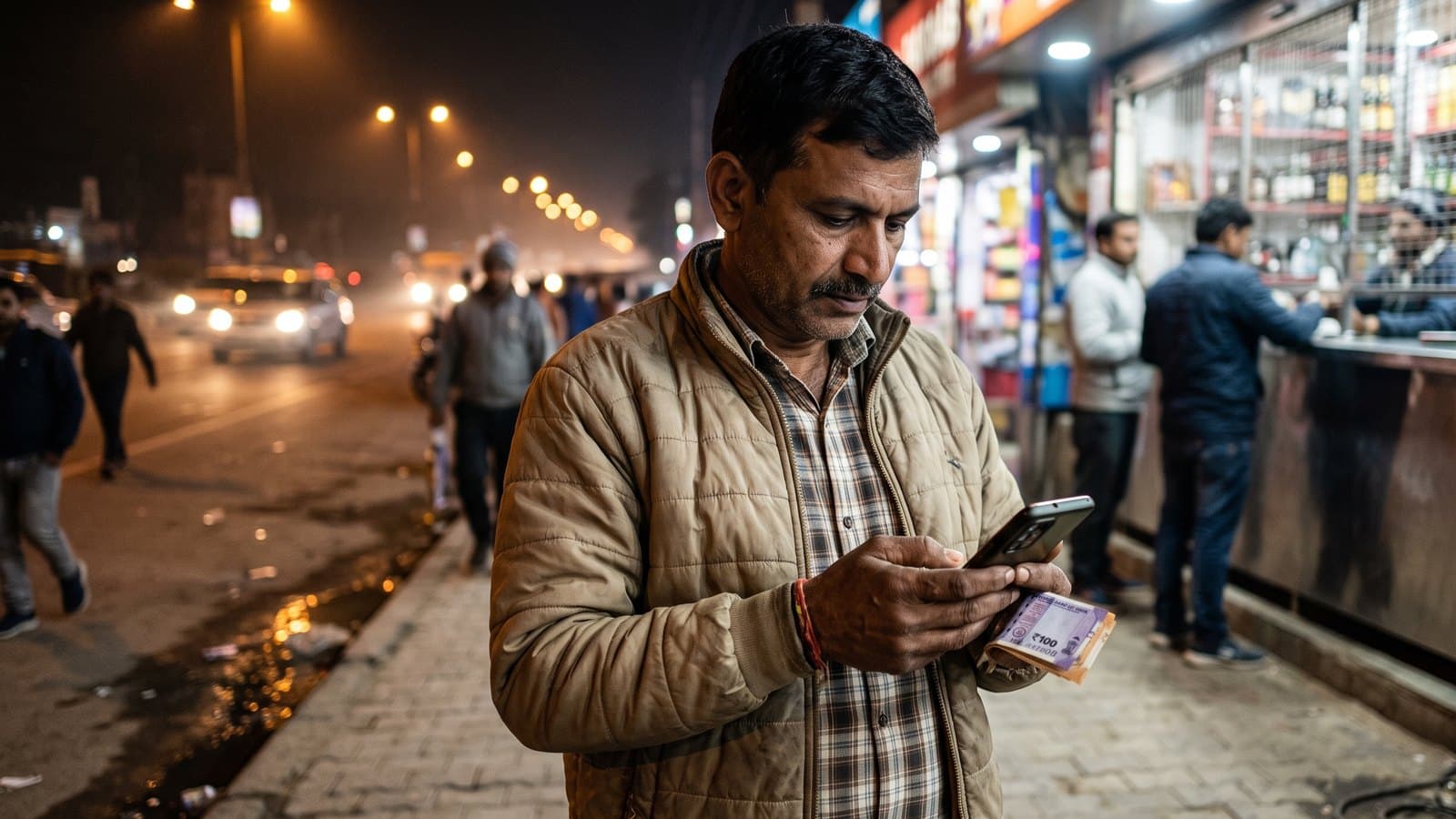
The Haryana excise policy 2026-27 is not a new policy. This year is covered by Excise Policy 2025-27, which runs from 12 June 2025 to 31 March 2027. If you hold an L-2 or L-14A zone, you still work under the rules you bid on. What changes this year is the calendar: quota deadlines, new minimum prices and shorter winter hours for rural vends.
The quarter that closed on 30 September asked you to have lifted 74 percent of your basic quota. The other 26 percent must be lifted by 31 March 2027. Fall short in a quarter and you pay a penalty on every proof litre you missed. Miss your licence fee and the vend can be sealed.
These deadlines land on the licensee, not on the salesman. An owner with two zones in Faridabad runs four vends, four counters and four cash drawers. Tracking that over phone calls does not work. This is the job liquor chain management software is built for. Below is what the policy asks until March, and how to keep up.
Which Policy Covers 2026-27
Haryana approved one policy for about 21.5 months. The longer period moves the excise year onto the financial year. From 1 April 2027, Haryana's excise policies will follow the April to March cycle.
The policy splits its period into seven quarters. The 2026-27 financial year is quarters 4 to 7, from April 2026 to March 2027.
The state amended the security and instalment clauses before the auction, and it can amend again. Confirm any figure here with your DETC (Excise) office.
Zones, Vends and Sub-Vends
Retail licences are allotted by e-tender in zones, and every zone has two vends. In an urban zone, both vends sit at fixed locations. In a rural zone, you choose the locations inside the command area, with the DETC's approval of the site plan. A mixed zone has both kinds. The policy caps L-2 and L-14A vends at 2,400 across the state.
At each vend you decide what to sell: country liquor only, IMFL only, or both. The total must stay within the zone's quota. For this rule, IMFL includes beer, wine, cider and RTB. Selling imported liquor bottled in origin, IFL (BIO), needs a separate L-2BF licence.
Rural zones can add sub-vends:
No sub-vend in a village of 500 people or fewer.
One sub-vend in a village of 501 to 5,000 people.
Up to two sub-vends in a village above 5,000 people.
The sub-vend fee for 2025-27 is Rs. 3 lakh for villages of 501 to 1,000 people, Rs. 6 lakh for 1,001 to 10,000, and Rs. 9 lakh above that.
Some zone owners also hold an L-1 (IMFL wholesale) or L-13 (country liquor wholesale) licence. These are granted only to retail licensees, one of each per district.
Licence Fee and Quota for the Rest of the Year
Your licence fee is paid in monthly instalments. The last part is adjusted from your security in the final two months. A late instalment attracts interest. If it continues, the DETC can seal your vends and cancel the licence. Check the exact due date and interest rate in your licence papers.
Your basic quota falls due quarter by quarter:
Quarter 5 (July to September 2026): 14 percent, taking you to 74 percent.
Quarter 6 (October to December 2026): 15 percent, 5 percent each month, taking you to 89 percent.
Quarter 7 (January to March 2027): 11 percent, split 4, 4 and 3, taking you to 100 percent.
Short lifting costs Rs. 150 per proof litre of country liquor and Rs. 200 per proof litre of IMFL. You pay it within 30 days of the quarter's last day, so by 30 October for the July to September quarter. Until you pay, you get no permits or passes. The short quantity also gets added to the next quarter's target.
After 20 January 2027, all your unlifted basic quota opens up for lifting. This needs your full security and licence fee paid. You can lift the last quarter's quota until 31 March 2027.
You may lift up to 50 percent over basic quota, on extra excise duty of Rs. 65 per proof litre for country liquor and Rs. 110 for IMFL. Your fee must be paid up to date.
Every lifting moves on a permit or pass from the district excise officer, with a retail permit fee of Rs. 13 per proof litre for country liquor and IMFS.
Hours, Dry Days and Minimum Prices
The policy sets these sale hours:
Rural vends: 8 AM to 11 PM from April to October, and 8 AM to 10 PM from November to March.
Urban vends: 8 AM to midnight all year.
So from 1 November, rural vends close an hour earlier. Brief your salesmen before that day.
An urban vend can stay open up to 4 extra hours for 25 percent of that vend's licence fee. You can take this one quarter at a time, paying in advance.
Dry days are 26 January until 5 PM, 15 August until 5 PM and 2 October for the full day. Vends also close for elections in their area. If you sell on a dry day, the vend is sealed for seven days from the next day. The next fixed dry day is 26 January 2027.
Haryana fixes only a minimum retail sale price, with no maximum. The 2026-27 table took effect on 1 April 2026. Rates for country liquor, the IMFL categories and beer went up. A few examples:
Country liquor (50 degree), quart: Rs. 200, up from Rs. 190.
IMFL Regular-III, quart: Rs. 320, up from Rs. 310.
Strong beer, 650 ml: Rs. 170, up from Rs. 160.
If a vend sells below the minimum, its licence is suspended for the day it is caught and the two days after. The vend stays sealed for that time.
The Records and Returns Every Vend Must Keep
The Haryana Liquor Licence Rules, 1970, say every licensee keeps the prescribed registers and files returns on time. Accounts are kept day by day. You must show them, with your stock and licence, to any excise officer who asks.
L-2 vend. Keep receipts and sales in Form L-22. Each receipt is entered with the number and date of its pass. For sales, an L-2 vend enters only the daily total. Each day ends with the day's totals and the closing balance. Each month, a monthly abstract in Form M-66 goes to the Excise Inspector.
L-14A vend. Keep receipts, sales and balance in Form L-26, bottle size by bottle size. Send the monthly abstract in Form M-68.
The Rules ask for more:
When you hold more than one licence, keep the stock and accounts of each licence separate.
Keep an inspection note book with numbered pages, authenticated by the Excise Inspector or ETO. Warnings and penalties are written in it.
When your licence expires, hand your registers to the DETC office against a receipt. Plan for this before 31 March 2027.
The 2025-27 policy adds its own rules at the counter:
A board in Hindi and English with your name, zone and licence number, the Excise Inspector's and DETC office numbers, and your opening and closing time.
The sale price of each brand on display.
A POS machine at every sale counter, and a POS invoice for any buyer who asks. The policy also asks licensees to adopt the integrated POS solution the department prescribes. Ask your DETC office what that means for your vends.
CCTV at every urban vend covering the entry, the exit and the billing counter.
Ask your Excise Inspector whether your district takes these returns on paper or online. Either way, the day's sales and closing stock should come from the counter, not from memory. That is what BottleShop's billing and stock features are for.
Penalties That Hit Owners Who Fall Behind
The policy penalties that matter most at a running vend:
Short lifting: Rs. 150 per proof litre of country liquor and Rs. 200 of IMFL, every quarter. No passes until paid.
Late licence fee: interest first. Then sealing of vends and cancellation.
No POS invoice: Rs. 5,000 each for the first 10 violations, Rs. 10,000 each for the next 10, Rs. 25,000 each for the next 10. After that, cancellation with your security forfeited.
Below minimum price: licence suspended for three days and the vend sealed.
Dry day sale: vend sealed for seven days.
Expired liquor: Rs. 50,000 the first time, Rs. 75,000 the second, Rs. 1 lakh after that.
Advertising: Rs. 1 lakh per advertisement the first time, Rs. 2 lakh the second, Rs. 3 lakh the third. After that it is treated as a major violation.
Most of these start at the counter. A salesman gives a discount below the minimum rate. A bill is skipped in the evening rush. A crate of beer sits past its date. The owner pays for each one, and a sealed vend earns no compensation.
Running Several Vends From One Phone
Picture an owner with two zones in Gurugram: four vends, each with its own cash, stock and salesmen. At midnight he calls each manager for the day's sale. He learns about a short quarter when the penalty notice comes.
BottleShop is India's first liquor-only POS. Each vend bills on an Android tablet at the counter, in under a second per bill. It works fully offline and syncs when the network returns, so a rural vend with weak signal keeps billing. Each vend runs as its own store, with its own stock and sales. You see all of them on one phone, and a daily WhatsApp report reaches you.
The Business plan puts the counter decisions on your phone. Every discount, bill cancellation, price change and cash withdrawal needs your approval through a WhatsApp OTP. A salesman cannot quietly drop a bottle below your price or cancel a paid bill. It runs up to 3 billing devices and sends WhatsApp alerts when stock runs low or runs out.
Enter each pass as a purchase and you can see what every vend received this quarter. Your accountant can check that against the quarter's quota before the quarter closes.
If you also hold an L-1 or L-13 licence, the Pro plan adds wholesale billing and credit with unlimited devices. BottleShop is live in 10 states with zero churn. Plans start at Rs. 25,000 a year, about Rs. 70 a day.
Frequently Asked Questions
Is there a new Haryana excise policy for 2026-27?
No. The 2026-27 year is covered by Excise Policy 2025-27, which runs from 12 June 2025 to 31 March 2027. Haryana used this longer period to align the excise year with the financial year. The next policy should start on 1 April 2027. Check with your DETC (Excise) office for any amendment notified since.
How much quota must a Haryana vend lift from October 2026 to March 2027?
Under the Haryana excise policy 2026-27 schedule, a zone must reach 89 percent of its basic quota by 31 December 2026 and 100 percent by 31 March 2027. The October to December quarter needs 15 percent. The January to March quarter needs 11 percent. Any shortfall from earlier quarters is added on top.
What are liquor vend timings in Haryana in 2026-27?
Urban vends sell from 8 AM to midnight all year. Rural vends sell from 8 AM to 11 PM from April to October, and from 8 AM to 10 PM from November to March. An urban vend can buy up to 4 extra hours for 25 percent of its licence fee.
Which registers must an L-2 vend keep in Haryana?
Under the Haryana Liquor Licence Rules, 1970, an L-2 vend keeps receipts and sales in Form L-22. Each receipt carries its pass number, and sales are entered as daily totals with the closing balance. A monthly abstract in Form M-66 goes to the Excise Inspector. L-14A vends use Forms L-26 and M-68.
What is the penalty for not giving a POS bill at a Haryana vend?
The 2025-27 policy charges Rs. 5,000 per violation for the first 10, Rs. 10,000 each for the next 10 and Rs. 25,000 each for the next 10. After that, the licence can be cancelled and the security forfeited. Every retail vend must have a POS machine at its sale counter.
What happens if a Haryana vend sells below the minimum retail price?
The licence is suspended for the day the breach is caught and the two days after it. The DETC (Excise) seals the vend for that period, and other penal action can follow. The minimum prices for 1 April 2026 to 31 March 2027 are higher than last year for country liquor, IMFL and beer.
Last updated: 3 October 2026