Wine Shop Daily Profit: Know It Before You Close the Shutter (2026)
Published By: Jatin Monga (CEO) on 04 Nov 2026
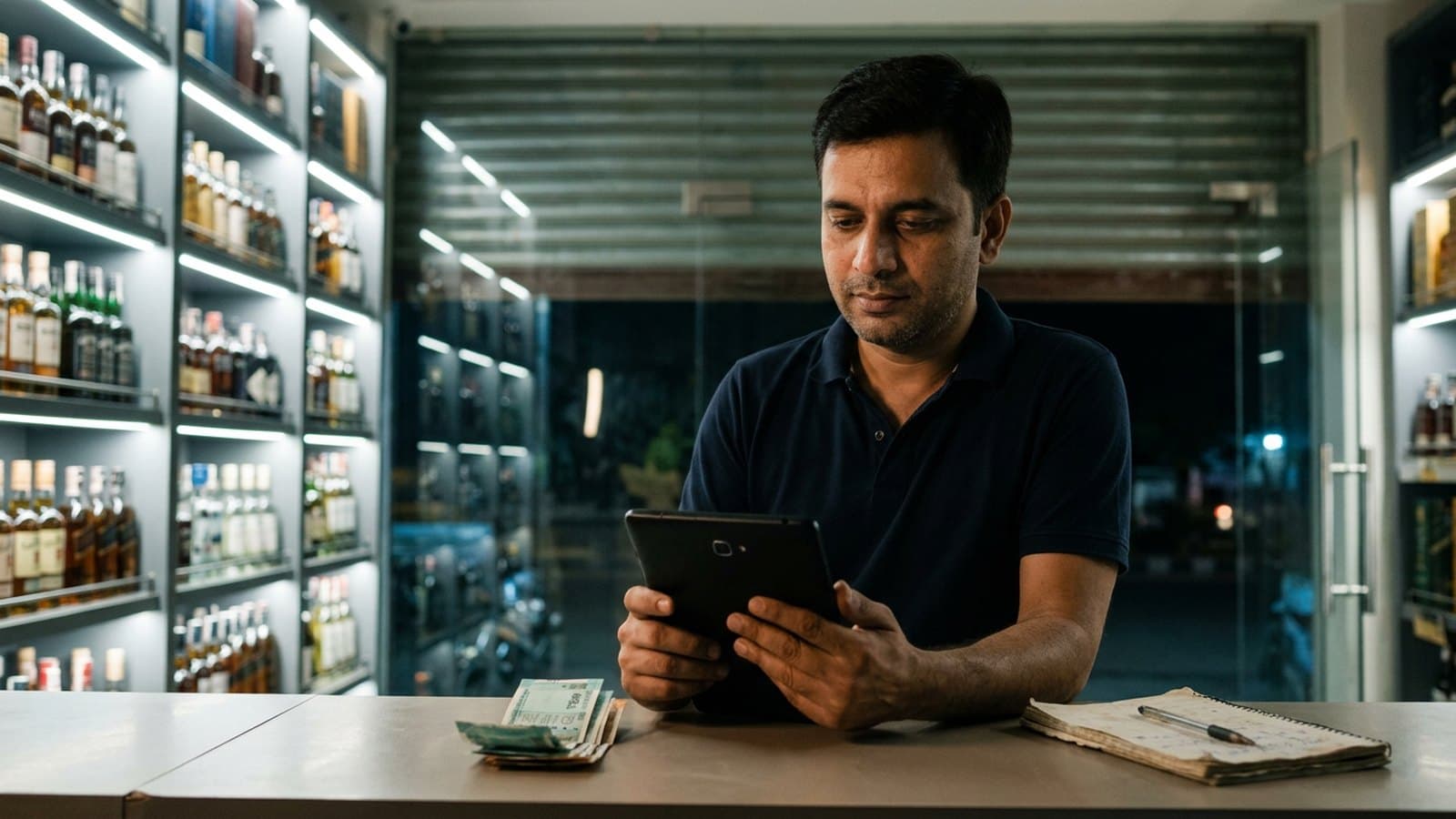
Wine shop daily profit is the money your shop made today, after the cost of the bottles you sold and after everything that leaked out during the day. You can know your wine shop's daily profit before you close the shutter.
Most owners do not. They learn the month's profit from the accountant weeks later, or they guess it from the galla. Owners on our calls say the same thing in different words: the day's profit should come out daily.
This post shows how to do that with five numbers you already have in the shop. It ends with a worked example for one day, using round made-up numbers.
Why the number arrives a month late
The profit for a day needs two sides: what you sold and what it cost you. The selling side is easy. The bills, or the parcha in UP, tell you what went out.
The cost side is where it breaks. The purchase price of each bottle sits on a wholesaler invoice from last week or last month. Nobody looks it up at 11 pm. So the owner adds up the sales, feels good or bad about the total, and waits for the month end.
By month end, the discounts, breakages, free bottles and short gallas of thirty days are mixed into one number. You know the month was weak. You cannot say which days, or why.
A good wine shop software fixes this by keeping the purchase price next to every bottle, so the cost side is ready the moment the bill is made. Without software, the method below still works on paper. It takes ten minutes a night once the landed cost list is made.
If your question is what a liquor shop earns in a year, that is a different post, and our earnings and margins guide covers it. This post stays on the daily number.
The five numbers you need before closing
You need five numbers. Four come from the day, one is prepared once and updated when a price changes.
Sale by category from the bills. IMFL, beer and wine, and country liquor where you sell it, as the day's bills or the parcha show them. In UP the daily category-wise registers already split the day this way.
Landed cost per bottle. The purchase price of each bottle including what the wholesaler charges you to get it to the shop. This is the list you prepare once, from the purchase invoices, and keep current.
Discounts given. Every rupee knocked off a bill, by any staff member, for any reason.
Breakages and free bottles. Any bottle that left the shelf without a bill. Broken in the store, given to a regular, taken for a sample.
The galla against the billed cash. The cash the bills say you collected, against the cash in the drawer.
In UP the excise department publishes the MRP for every brand, and Haryana sets a floor price. So the gap between landed cost and shelf price for a given bottle is largely decided for you. What changes from day to day is numbers three, four and five. Those are the ones that decide whether the shelf margin reaches your pocket.
A theka management software records the first four as the day runs, and asks for the fifth at closing. On paper, you need a notebook at the counter and a rule that nothing is written from memory.
A worked example: one day at one shop
These are round numbers made up to show the method. This is an example, not a real shop. Your prices and costs will be different.
The shop sold the following today, at shelf price, as the bills show:
IMFL: Rs. 60,000
Beer: Rs. 20,000
Wine: Rs. 5,000
Total billed at shelf price: Rs. 85,000
The landed cost of the bottles sold, from the landed cost list, bottle by bottle:
IMFL: Rs. 52,000
Beer: Rs. 17,000
Wine: Rs. 4,000
Total landed cost of what was sold: Rs. 73,000
Sale minus landed cost is Rs. 12,000. That is the shelf margin on the day. It is not yet the profit.
Now the leaks, written during the day:
Discounts on bills: Rs. 1,500
Two beer bottles broken in the store, landed cost: Rs. 300
One bottle given free to a regular customer, landed cost: Rs. 700
Total leaks: Rs. 2,500
Gross profit for the day is Rs. 12,000 minus Rs. 2,500. That is Rs. 9,500.
Because of the discounts, customers owed Rs. 83,500, not Rs. 85,000. They paid it like this:
Cash: Rs. 30,000
UPI: Rs. 45,000
Card: Rs. 5,000
Credit, to be collected later: Rs. 3,500
The four add up to Rs. 83,500, so the payment split matches the bills.
The galla opened with Rs. 5,000. Rs. 1,000 was paid out of it for ice, tea and an auto. So the drawer should hold Rs. 5,000 plus Rs. 30,000 minus Rs. 1,000, which is Rs. 34,000. The count is Rs. 33,600. The galla is short by Rs. 400.
Gross profit for the day versus money in hand
The example gives two numbers, and both matter.
The first is gross profit for the day: Rs. 9,500. This tells you whether the shop earned its keep today. Compare it across days and you see which days and which categories make money. This is the number that should come out daily.
The second is the money actually in hand. Of the Rs. 9,500, Rs. 3,500 is sitting with credit customers. Rs. 400 is missing from the galla. Rs. 1,000 went out as shop expenses. What you can touch tonight, above what the stock cost you, is Rs. 4,600.
Rent, salaries, electricity and the licence fee come out of that over the month. So the second number is the one that pays the bills, and the first number is the one that tells you whether the business works.
When the two drift apart for weeks, the shop is profitable on paper and short of cash. The gap is almost always uncollected credit, or a galla that is short more nights than not. The nightly galla close has its own post, so this one takes the count as done and uses the result.
Why the shelf margin is not profit in the galla
Four things sit between the printed margin and the money in the drawer.
Discounts. A Rs. 50 discount does not come out of the sale. It comes out of the margin on that bottle, which is much smaller. Ten such discounts in a day take a visible bite out of the day's gross profit, and nobody feels it at the time.
Credit. A credit sale moves stock out and brings no money in. The bill looks like a sale, the galla does not. If credit is not written against a name and a date, the day's profit is overstated and the cash is simply gone until someone remembers to ask.
Slow stock. Today's profit went somewhere. Often it went to the wholesaler for stock that is still on the shelf a month later. The profit was real. It now sits in bottles that do not move, and the drawer feels empty on a good month.
The short galla. Rs. 400 a night does not sound like much. Over a month it is Rs. 12,000. A short galla is usually a mistake in change, a payment entered under the wrong mode or an expense nobody wrote down. Treat it as a number to find, not a person to blame.
How to make the number come out daily
The method only works if the inputs are written at the time. These habits make that happen.
Build the landed cost list once. Take the last purchase invoice for every bottle you stock, work out the cost per bottle, and keep it on one sheet. Update a line when a new invoice shows a new price. A wrong entry here gives a wrong profit every day until it is fixed. A case rate typed as a bottle rate is the common mistake.
Write the discount on the bill, with the staff member's name. Not in someone's head, not in a separate notebook. At night the discount total is the sum of those lines.
Write breakages and free bottles the same day. One line each: bottle, reason, landed cost. A bottle that left the shelf with no line is a bottle you will count as missing at the next stock check.
Close the galla at the same time every night, in the same order. Count before any cash leaves. Compare with the billed cash. Write the difference, even when it is zero.
Keep credit on a list with a name, a date and an amount. Read it every Monday. Credit that nobody reads is a gift.
Then write five numbers in one line for the day: sale, landed cost, leaks, gross profit, cash in hand. After two weeks, one line a day tells you more about your shop than the month-end statement.
How BottleShop gives you the five numbers
BottleShop is built so the five numbers above come from the day's billing, not from a notebook at 11 pm.
Every bill moves stock, and the purchase entry holds the cost of each bottle, so sale by category and the cost of what was sold are ready when the last customer leaves. The Essential plan gives you daily, business and compliance reports from that billing, cash drawer management for the galla close, and a daily WhatsApp report to the owner's phone. In UP the daily category-wise registers come out of the same bills.
If the leaks are your problem, the Business plan puts every discount, bill cancellation, cash withdrawal and price change on your phone as a WhatsApp OTP, and it does not go through until you approve it. It also tracks retail credit against each customer, so a credit sale is never a sale that quietly went missing.
If you want the yearly view built from those daily numbers, the Pro plan adds an annual profitability report on top of everything in Business. A daily profitability snapshot can be added as a second WhatsApp report on any plan.
Everything else the system does is on the features page. It works offline and syncs when the internet returns. Plans start at Rs. 25,000 a year, about Rs. 70 a day. If you want to see the numbers behind your own wine shop daily profit on one screen, ask for a demo and bring last night's bills.
Frequently Asked Questions
What is wine shop daily profit, in simple words?
It is what the shop earned today after the cost of the bottles it sold and after the day's leaks. Add the day's sales at shelf price. Subtract the landed cost of those bottles. Subtract discounts, breakages and free bottles. The result is the day's gross profit. Rent and salaries come out of it over the month.
What is landed cost, and where do I find it?
Landed cost is what one bottle cost you to put on the shelf: the purchase price plus whatever the wholesaler charges to get it to you. It is on your purchase invoices. Work it out per bottle for every item you stock, keep it on one sheet, and update a line when a new invoice shows a new price.
Why is my profit fine on paper but my galla always feels empty?
Usually one of three things. Credit sales count as sales but bring no cash until collected. Profit from good days has been spent on stock that is not moving. Or the galla is short a little most nights and nobody adds it up. Track credit, slow stock and the nightly difference separately and the gap explains itself.
Should I count a discount as a cost?
Yes, and count it against the margin, not against the sale. A Rs. 50 discount on a bottle takes Rs. 50 from the small margin on that bottle. Write every discount on the bill with the staff name. At night the total of those lines is one of your five numbers, and it is usually larger than owners expect.
How do I handle breakages and bottles given free?
Write each one the same day: which bottle, why, and its landed cost. They reduce the day's profit by their landed cost, not their shelf price, because no sale happened. A bottle that leaves the shelf without a line will show up as a missing bottle at the next stock count, with no explanation.
Can I do this without software?
Yes. You need a landed cost sheet, a rule that discounts and breakages are written at the time, and a galla close at the same hour every night. It takes about ten minutes once the sheet exists. Software does the same work from the bills as they happen, so the number is ready instead of calculated.
Aaj ka profit aaj hi pata chal jaata hai. Message us on WhatsApp at +91 84473 30196 for a free inventory audit of your shop.
Last updated: 4 November 2026