Beer Expiry Date: What a Liquor Shop Owner Must Check in 2026
Published By: Jatin Monga (CEO) on 20 Nov 2026
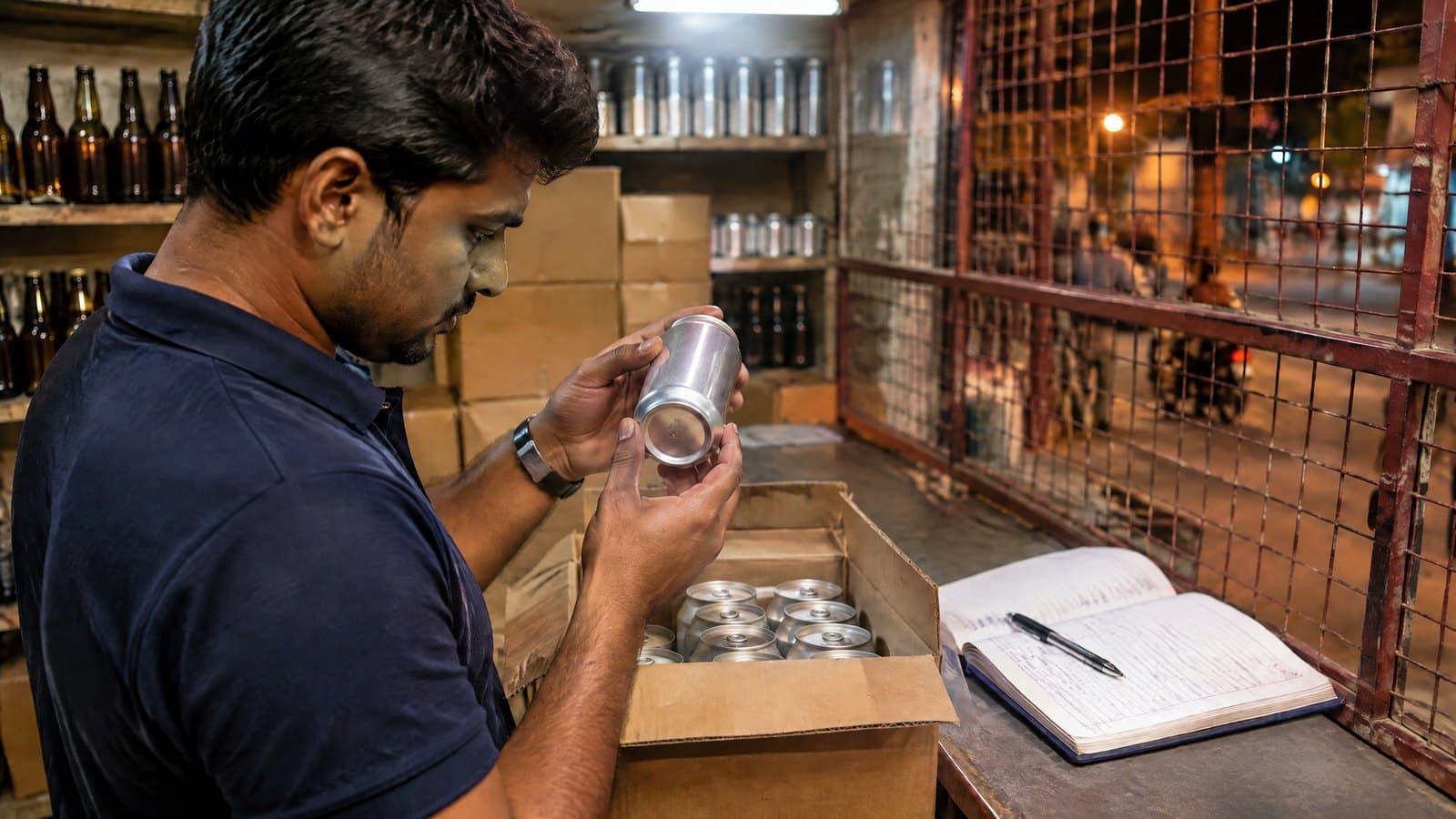
The beer expiry date is the last date the brewer says a can or bottle of beer is fit to sell. Unlike whisky or rum, beer has a short life, so the date matters to the shop that holds it.
For a wine, beer, model or composite shop, beer that crosses its date is lost money. It cannot be sold, it still sits in your stock count, and in Haryana selling it carries a fixed penalty. In UP, a customer complaint at a Meerut wine shop in March 2026 led to a police stock check that found a large amount of expired beer.
Most beer goes old because the shop bought more than it could sell in time. This guide shows how to read the date, where beer stock goes wrong, the checks that catch it, and how live stock and sales records help you order beer in step with what you sell.
What the expiry date on beer means for your shop
The FSSAI rules for alcoholic beverages, notified in 2018, treat beer differently from spirits and wine. Clause 5.10 says that an alcoholic beverage other than wine with less than 10 per cent alcohol must print its date of expiry on the label. The date is written as date, month and year, in that order, after the words "Expiry date" or "Use by".
Beer falls inside this rule. The same regulations class beer as regular or mild (above 0.5 and up to 5 per cent alcohol) and strong (above 5 and up to 8 per cent). Both are below 10 per cent. In UP registers, these are your beer 5% and beer 8% categories.
The rule lets the brewer add "Best before" as extra information. For your shop, the expiry or use-by date is the line you must not cross.
Whisky, rum and vodka are above 10 per cent, so this clause does not cover them. Beer is the main category in your shop that runs against a printed date.
Where the date is printed and how to read it
There is no single spot. On a can, look at the base and the top near the lid. On a bottle, look at the front label, the back label and the neck. On a carton, check the side panels.
FSSAI's general labelling rules ask for three things on a pack:
A batch, code or lot number.
The date of manufacture or packing.
The expiry or use-by date, grouped with the manufacturing or packing date in one place.
How long beer lasts
Many owners search "beer expiry date in india" hoping for one number. There is no such number. The answer to "beer expiry date kitni hoti hai" depends on the brand, the batch and the state.
Haryana's Excise Policy 2025-27 gives one fixed point. Under clause 12.21, if a brewery certifies that its beer stays fit for human consumption for 10 months from the date of bottling, the department approves a shelf life of 9 months for that brand.
For UP, we did not find a published shelf-life rule. Read the date on each pack and confirm each brand's period with your supplier.
Why beer goes past its date in a shop
Beer expires because of buying and shelving habits. These are the usual causes.
Overbuying before summer. The owner fills the shop in March or April on last year's guess. If the heat comes late or a brand slows down, the extra cartons sit.
A scheme load. A supplier offers a scheme on a brand, and the shop takes far more cases than it sells in a month. The scheme margin is lost if those cases cross their date.
Old stock hidden behind new. New cartons go in front because it is easier. The old cartons stay at the back and nobody sees them until the date has passed.
First in, first out is not followed. Staff pick the nearest can, not the oldest one. Fresh stock sells and old stock waits.
Hot storage. Cartons stacked near the shutter, in direct sun or on a hot floor are a poor place for slow stock. Keep slow beer in the coolest, darkest corner you have.
No daily sales figure per brand. Without it, the owner orders by feel. Slow brands get the same order as fast ones.
The last cause sits under all the others. We cover the same pattern for whisky and wine in our guide on reducing dead stock in a wine shop.
The beer expiry date check: at receipt and every week
This check takes a few minutes once it is a habit. Do it at two points.
At receipt
Before you sign for a delivery, open one carton of each brand and size.
Read the expiry or use-by date and the packing date.
Compare it with what you already hold of that brand. If the new stock is older than your shelf stock, ask the supplier why.
If the date is close, raise it with the supplier before you accept the stock, and keep a note of what was said.
Write the date on the carton in marker, or note it in your stock register against that purchase.
Every week
Pick one fixed day, for example Monday morning before the shop opens.
Pull every beer carton forward and read the dates, brand by brand.
Move the oldest stock to the front of the rack and the front of the fridge.
Make a short list of brands that are within two months of their date.
Push those brands at the counter first and stop reordering them until they clear.
A composite shop holds beer next to IMFL and wine, so beer slips through when the counting is done by total cases. Count beer by brand and size, and check the date while you count. Our page on composite shop software shows how BottleShop runs a shop that sells all three.
Order smaller and more often, from real sales
The fix for expired beer is in the order, not on the shelf.
Here is a simple way to set each order.
Find the average daily sale of each beer brand and size over the last two weeks.
Multiply it by the days until your next delivery.
Add a small buffer for weekends and hot days.
Subtract the stock you already hold.
Round to full cases.
If a brand sells two cases a week, there is no reason to hold ten. When a scheme offers extra cases, work out how many weeks those cases need to sell. If that time runs close to the expiry date, the scheme is not worth it.
Smaller orders only work if you notice early when a brand is running low. A paper register shows it late, often when the fridge is already empty.
What to do with beer near or past its date
Beer that is close to its date should be sold first, at the counter, before fresh stock of the same brand. Keep it at the front and tell your staff to offer it first.
Beer that has passed its date must come off the shelf the same day. Keep it in a separate, marked place, away from saleable stock, and do not bill it.
The rules for what happens next are not the same in every state.
Haryana. Clause 12.20 of the Excise Policy 2025-27 says a licensee found selling expired liquor pays a penalty of Rs. 50,000 for the first offence, Rs. 75,000 for the second, and Rs. 1 lakh for each later offence. Clause 12.21 says confiscated or expired liquor, after the legal formalities, is disposed of by sending it to an effluent treatment plant.
Uttar Pradesh. We did not find a published rule on expired beer at a retail shop. In the Meerut case of March 2026, police checked the shop's stock and found a large amount of expired beer. The District Excise Officer said action would follow the rules after an inquiry.
Do not destroy, pour out or return expired beer on your own. Speak to your district excise office first and ask how they want it recorded and handled. Speak to your supplier too, because some may take back stock under their own terms. Get any answer in writing, and keep the stock in your records until the department tells you how to close it.
How BottleShop helps you buy beer you can sell
BottleShop is an AI-native Liquor Tech company building intelligence for the liquor industry. Its POS and back office run liquor shops in 10 states, with zero churn.
BottleShop does not read the date on a can. The shelf check stays a human job. What BottleShop does is remove the cause of most expired beer, which is buying more than you sell.
Purchase entry. Every delivery is entered against its brand and size, so you know exactly what came in and when.
Billing that updates stock. Each bill reduces stock as it is made. Billing takes under one second, even in the evening rush.
Inventory and sales reports. You see how much of each beer brand and size you sold, day by day, and what is left. That is the daily sale figure your order needs.
Low-stock alerts. The Business plan sends WhatsApp low-stock and stockout alerts to the owner, so you reorder a fast brand in small lots before it runs out, instead of loading up.
UP shops also get their daily category-wise registers, including beer 5% and beer 8%, built from billing. You can see the full list on our features page.
Frequently Asked Questions
Is an expiry date compulsory on every can and bottle of beer?
Yes, under the FSSAI rules for alcoholic beverages. Clause 5.10 says a drink other than wine with less than 10 per cent alcohol must print its expiry date, after the words "Expiry date" or "Use by". All beer is below 10 per cent, so every can and bottle should carry one. Best before is optional extra.
Where do I find the date on a beer can?
Check the base of the can first, then the top near the lid. On bottles, look at the front label, the back label and the neck. On cartons, check the side panels. The manufacturing or packing date should sit next to it, because FSSAI's labelling rules ask for the two dates to be grouped in one place.
How many months does beer last on my shelf?
It depends on the brand, so read each label. In Haryana, the Excise Policy 2025-27 approves a 9-month shelf life for a brand whose brewery certifies its beer stays fit for 10 months from bottling. For UP, we found no published rule, so confirm each brand's period with your supplier.
What is the penalty for selling expired beer in Haryana?
Clause 12.20 of Haryana's Excise Policy 2025-27 sets a penalty for any licensee found selling expired liquor. It is Rs. 50,000 for the first offence, Rs. 75,000 for the second, and Rs. 1 lakh for each later offence. Remove expired beer from the shelf the same day you find it.
Can I return expired beer to my supplier?
There is no single rule we could confirm for UP or Haryana retail shops. Some suppliers may take stock back on their own terms. Before you return, destroy or write off any beer, ask your district excise office how to record it, and get the supplier's answer in writing. Keep it out of saleable stock meanwhile.
How often should I check beer dates in my shop?
Check at two points. Open one carton of each brand and size at every delivery and read the date before you sign. Then do a full shelf check once a week on a fixed day. Move the oldest stock to the front and stop reordering any brand within two months of its date.
Jo maal nahi bik raha, ab aapko dikhta hai. Message us on WhatsApp at +91 84473 30196 for a free inventory audit of your shop.
Last updated: 20 November 2026